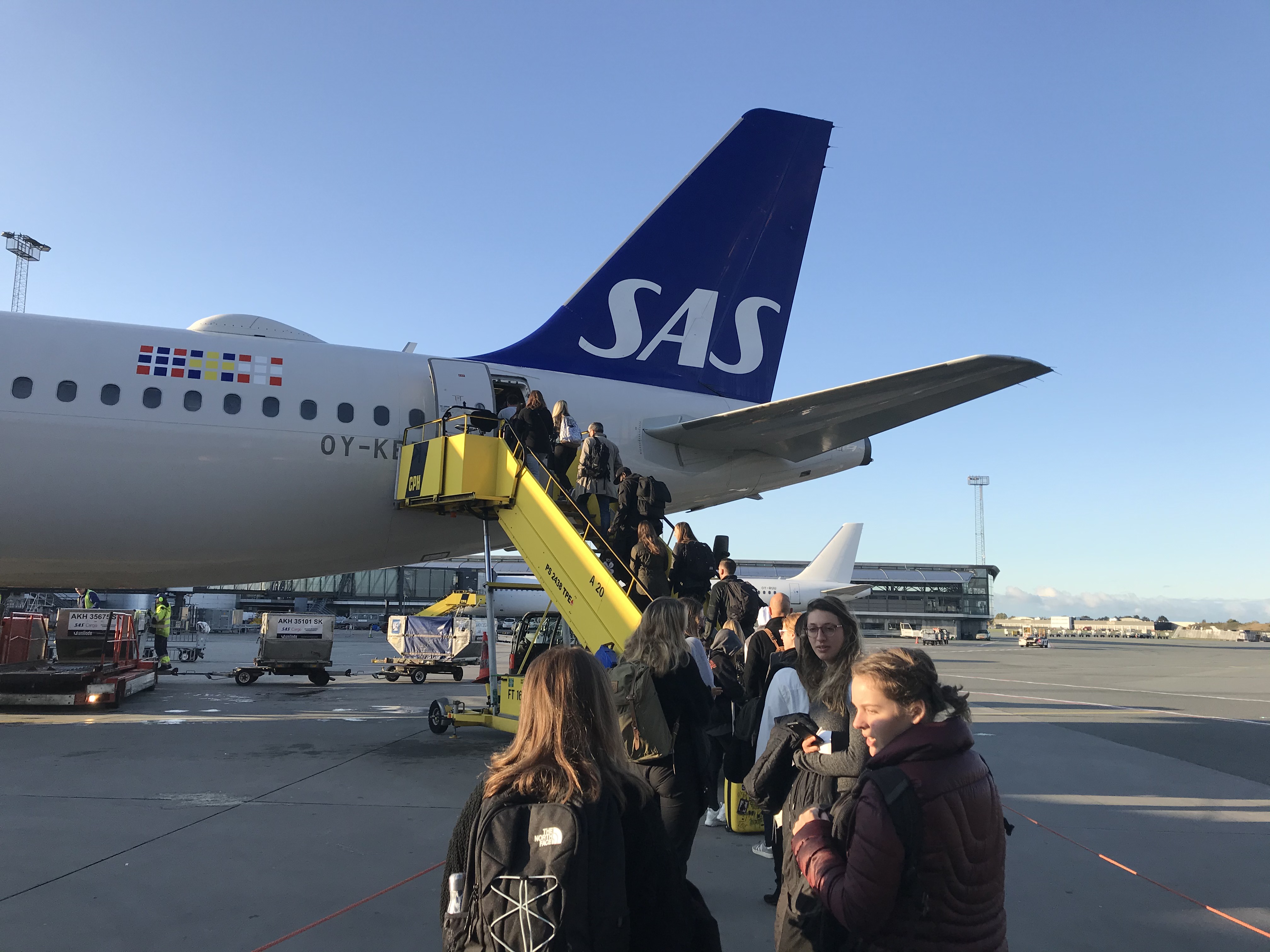
Hi everyone! I spent this week (fall break #1) in Berlin and Poznań with my Medical Practice & Policy (MPP) core course, where we learned about the German and Polish healthcare systems and saw the sights of the cities. It was a fantastic week! I’ll write this blog post in the form of a day-by-day recap. 🙂
Sunday:
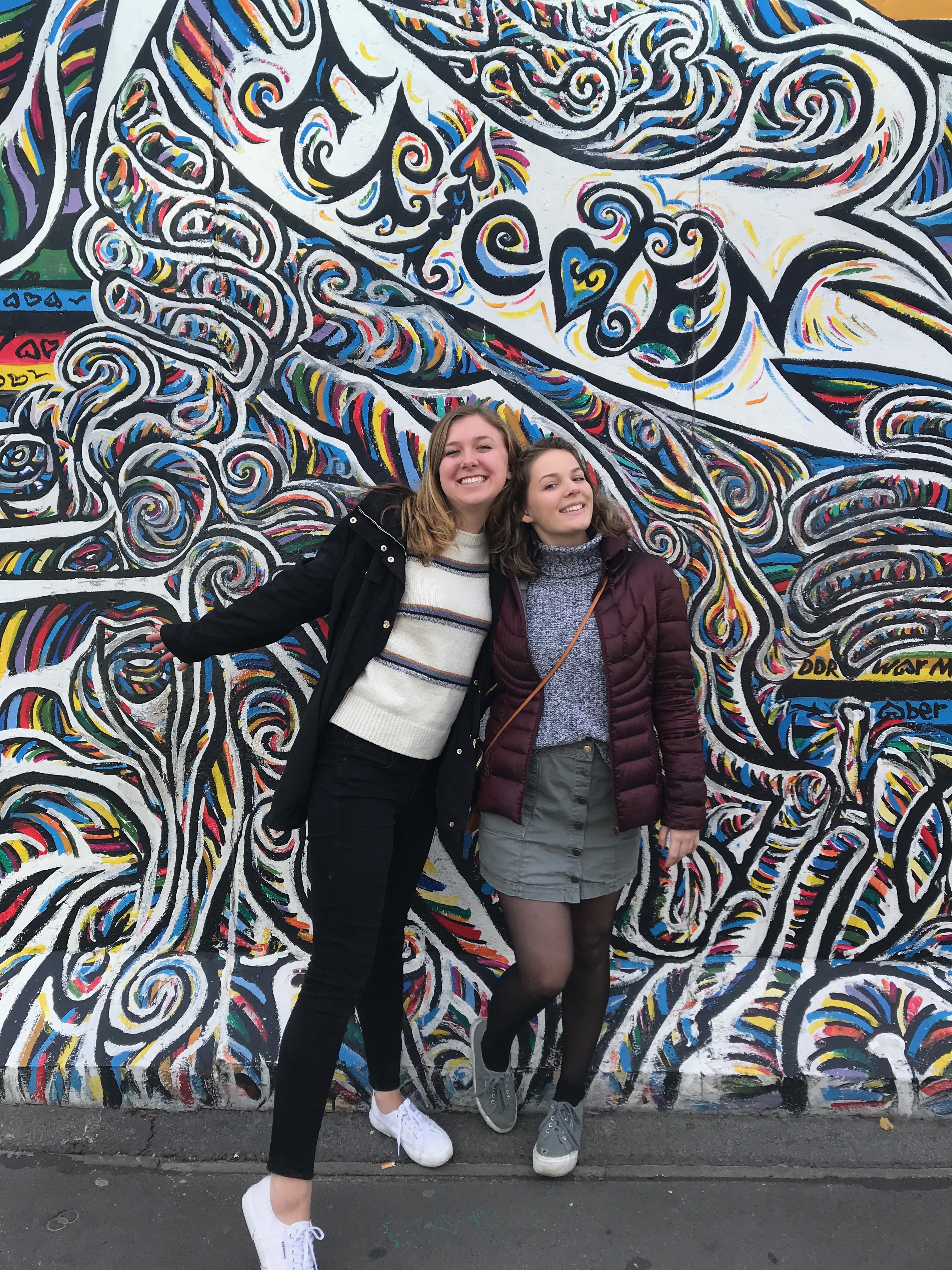
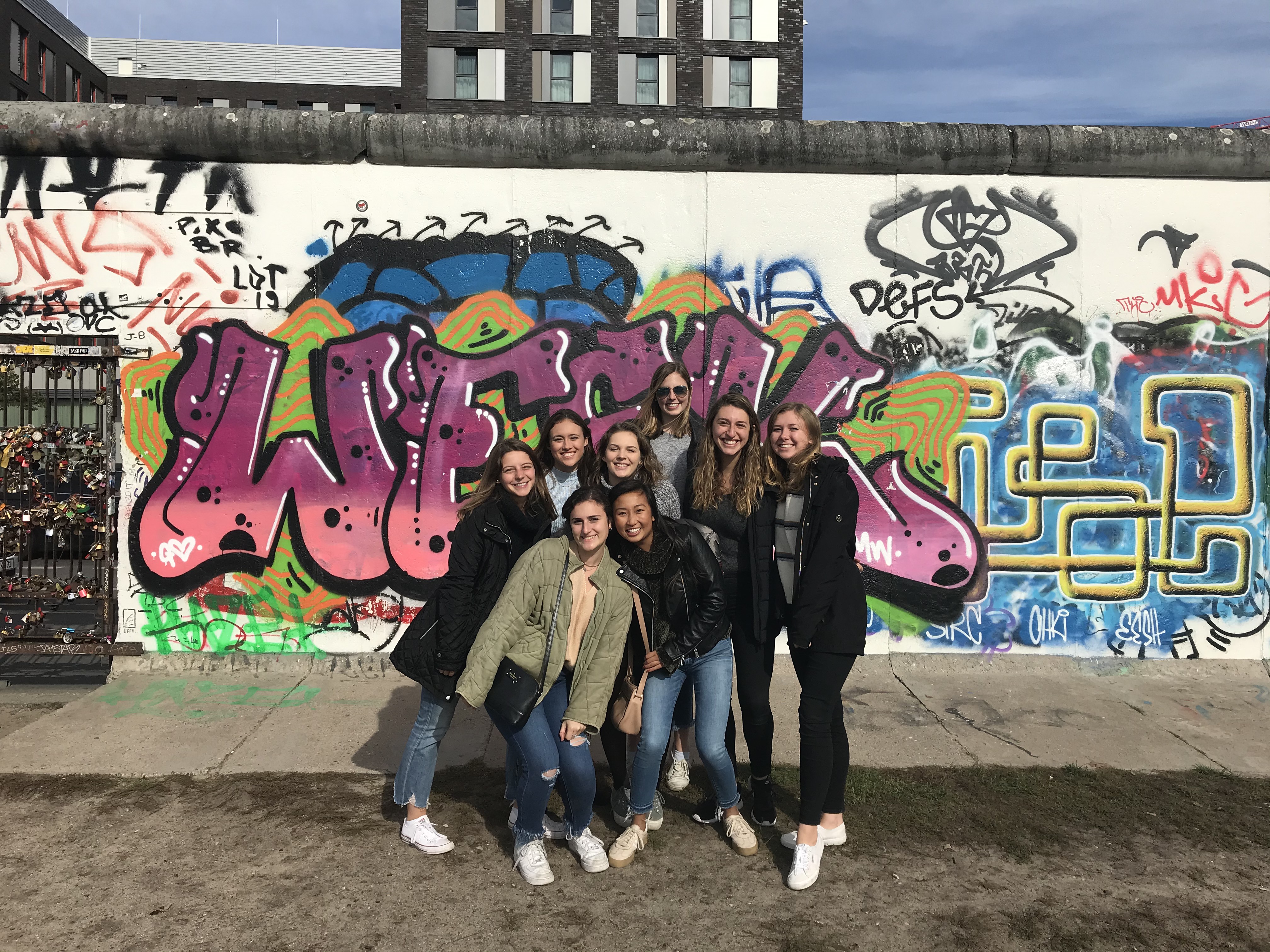
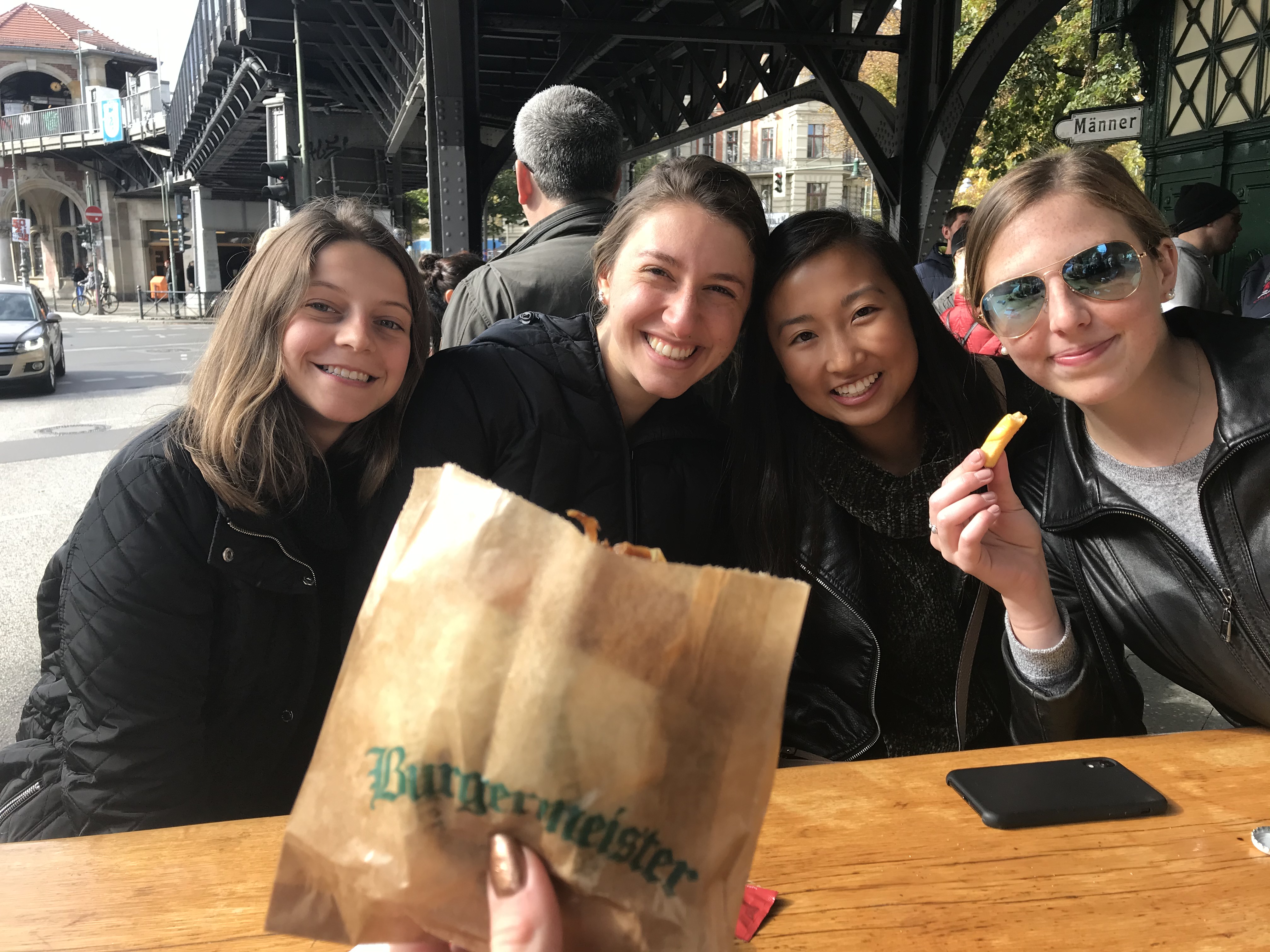
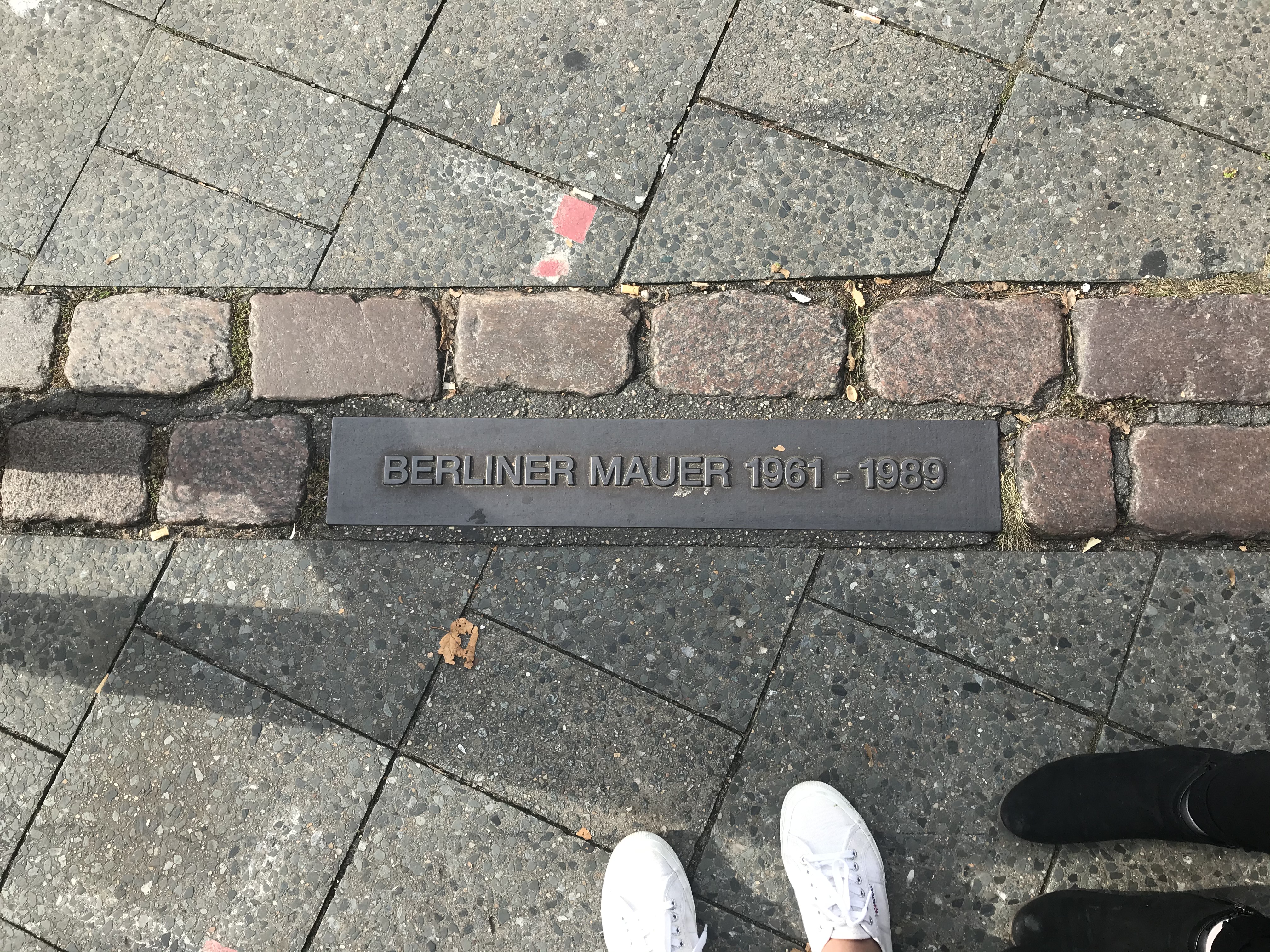
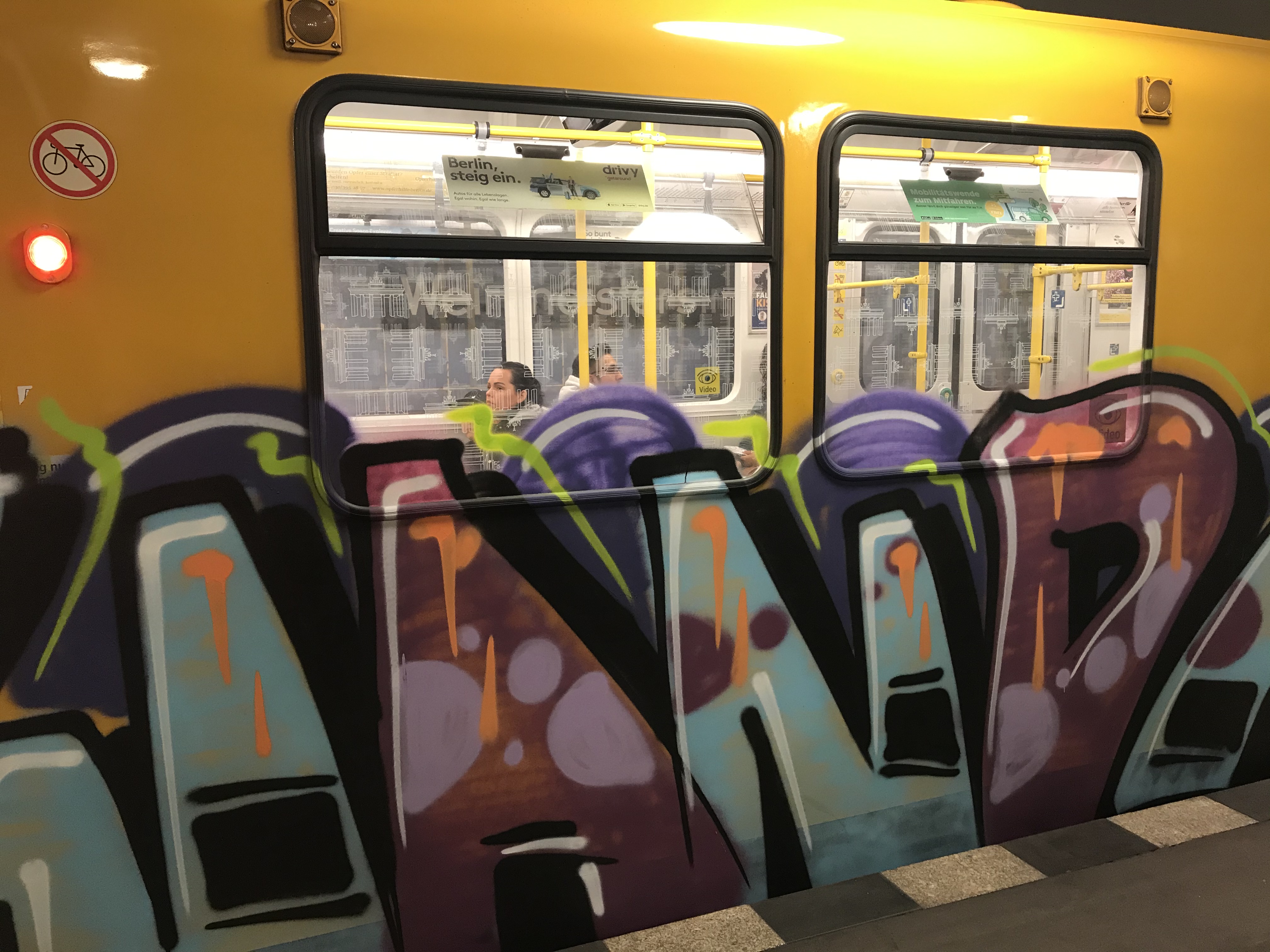
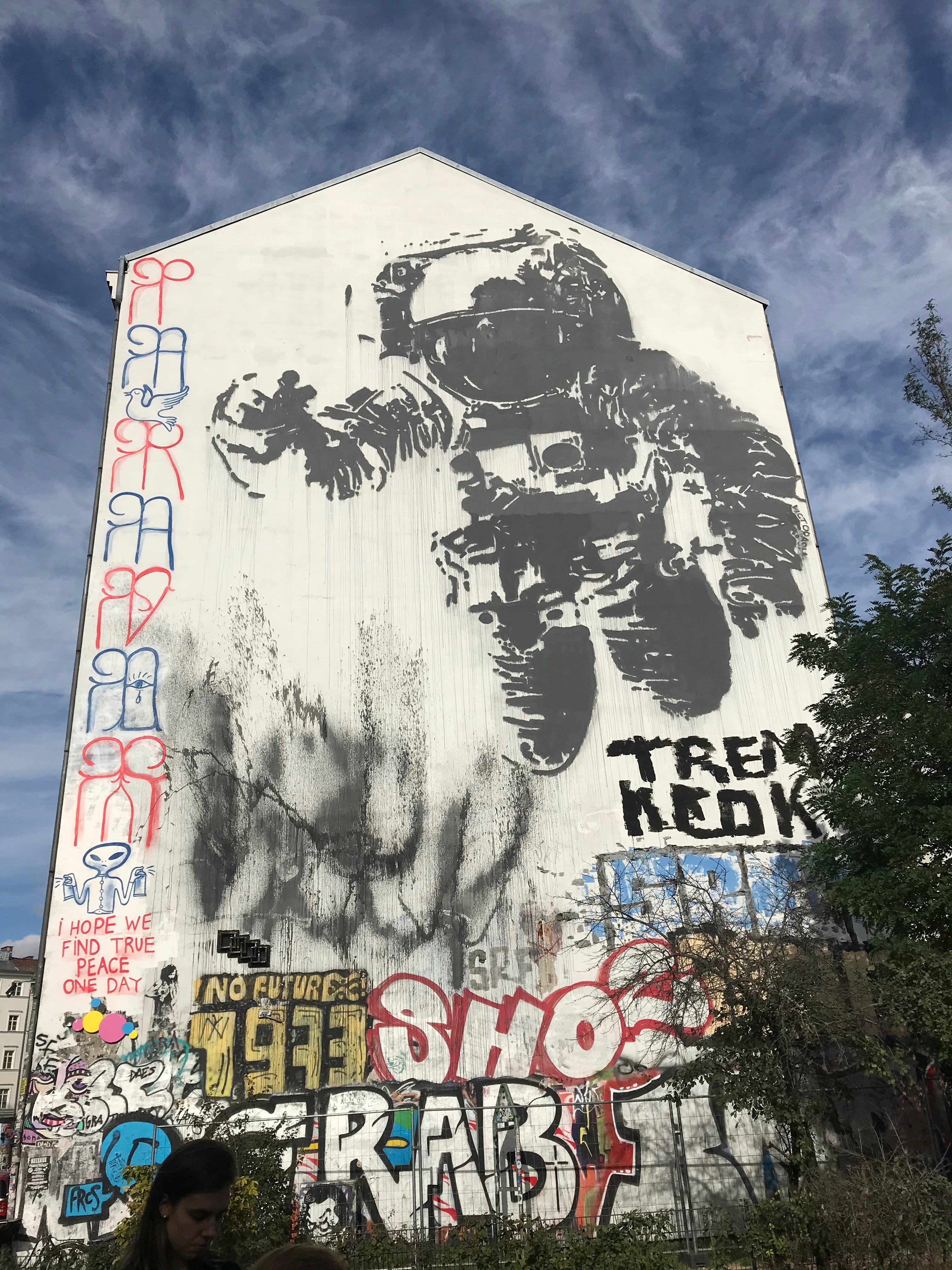
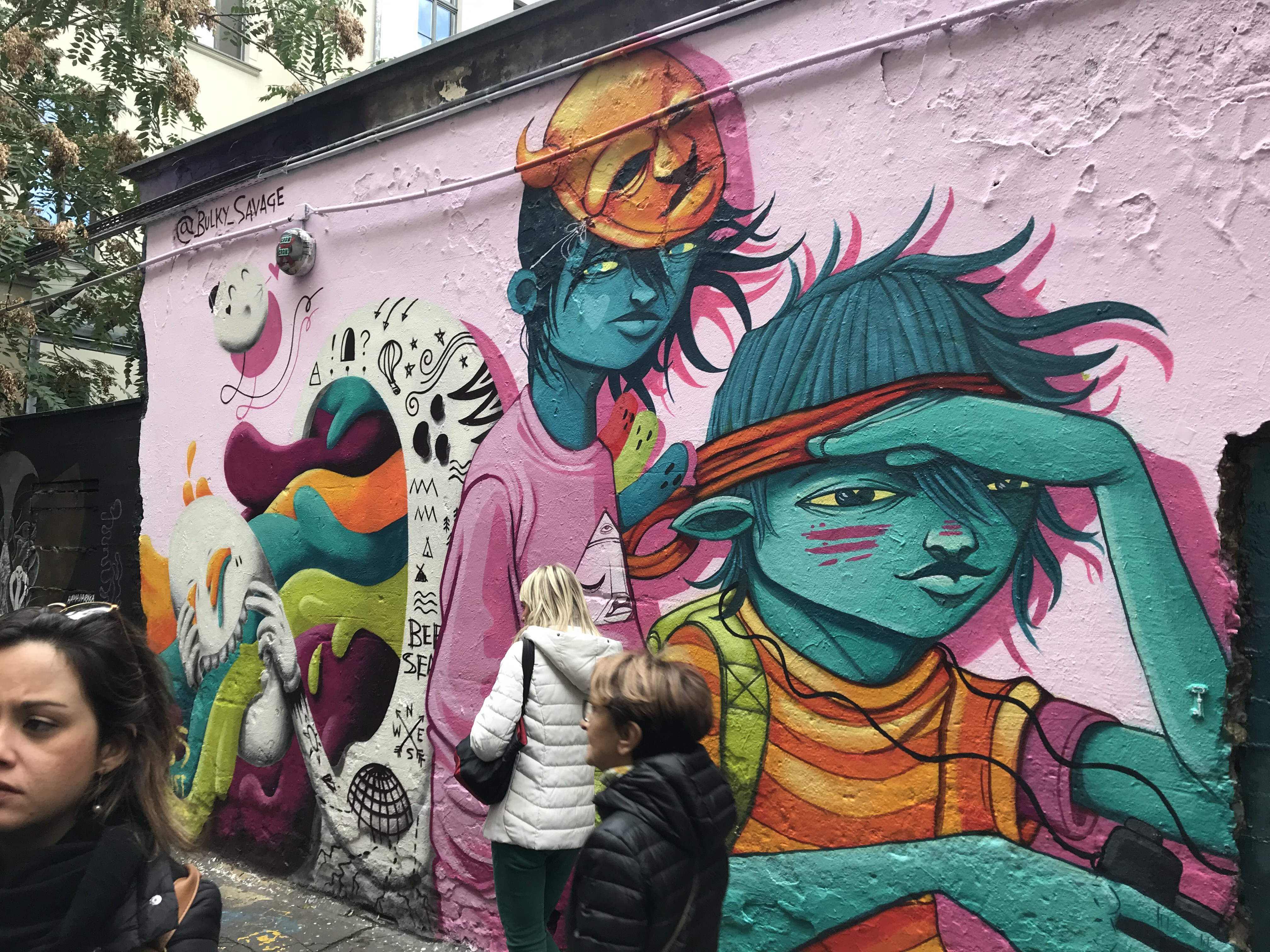
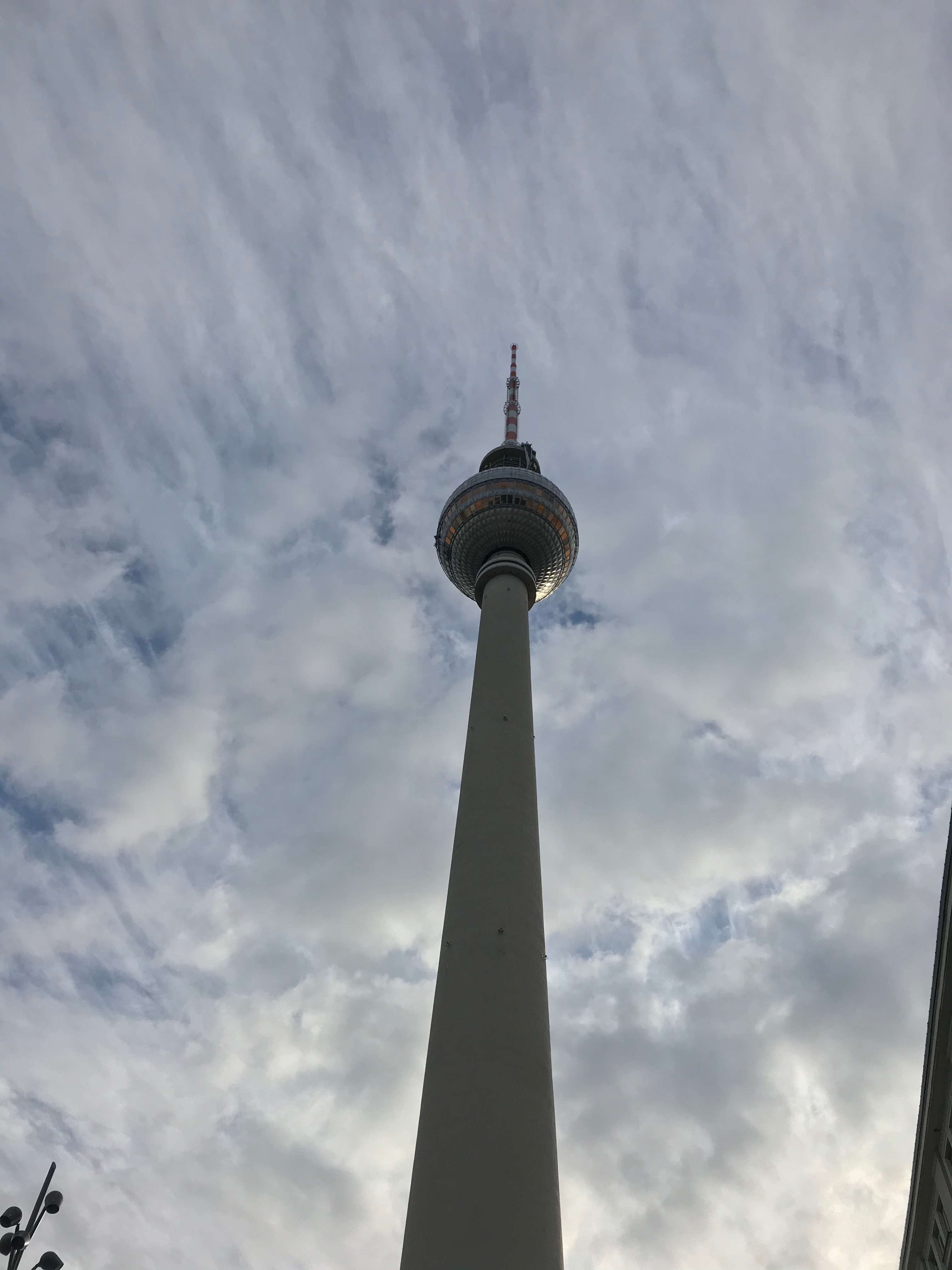
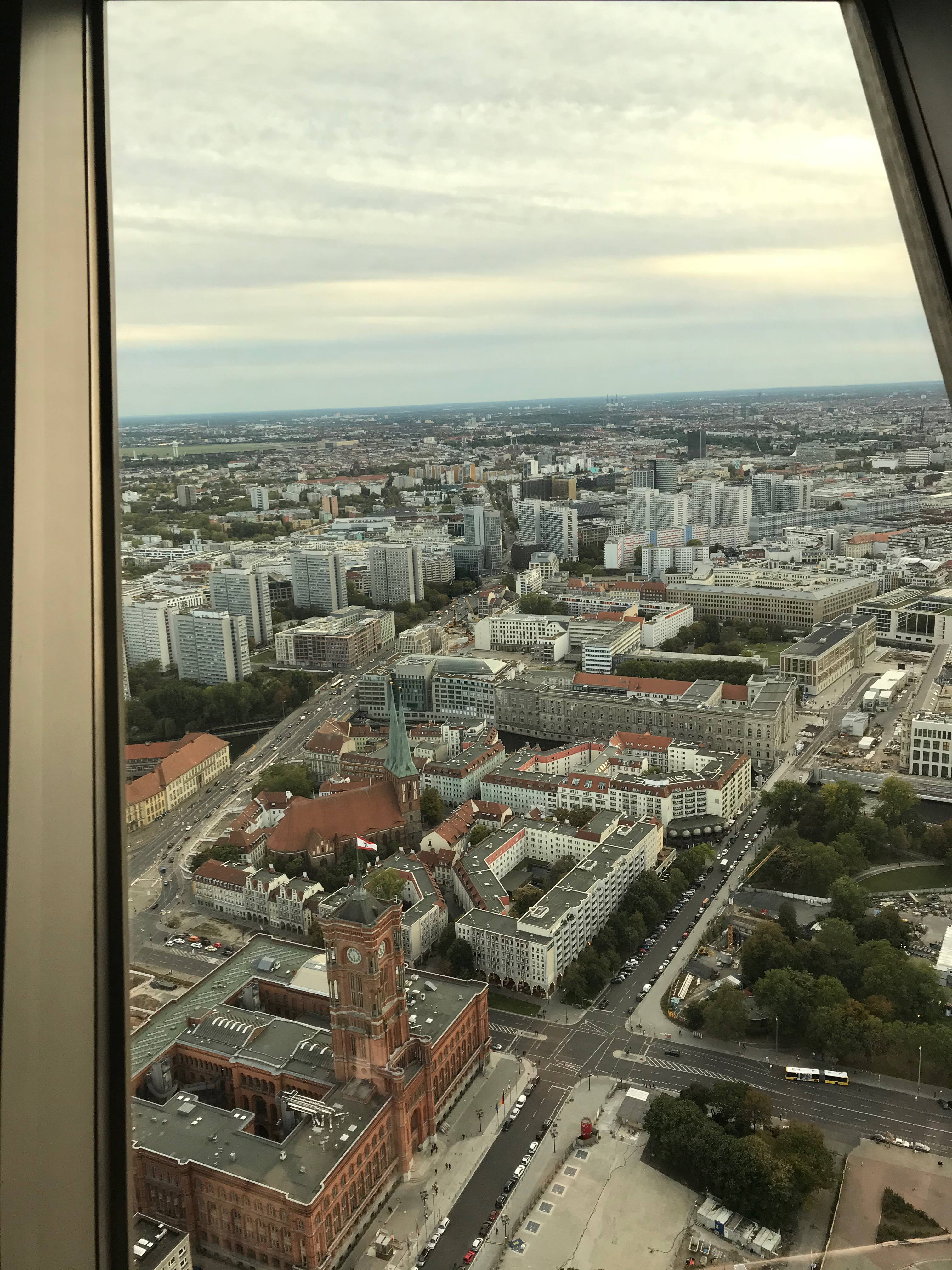
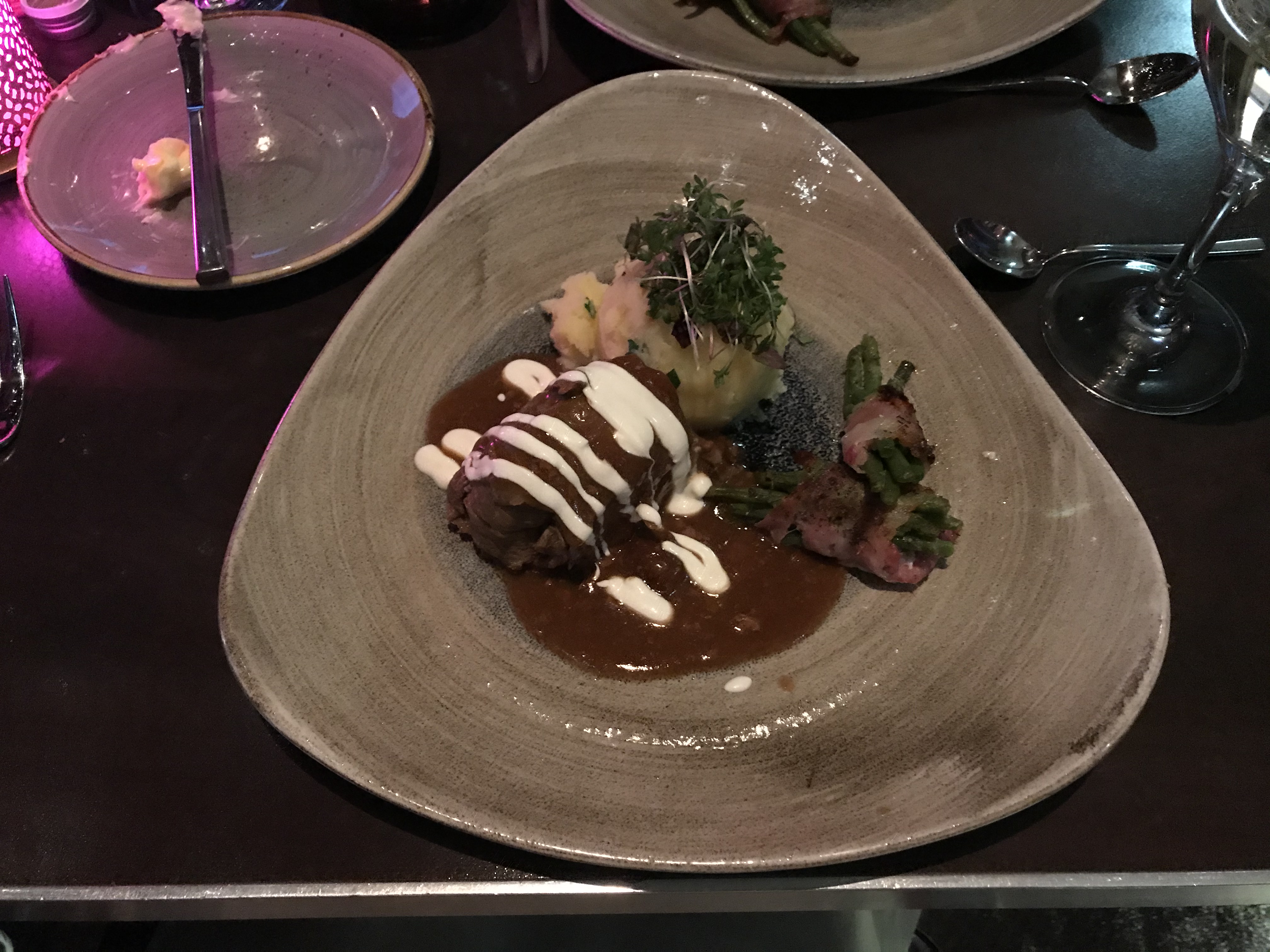
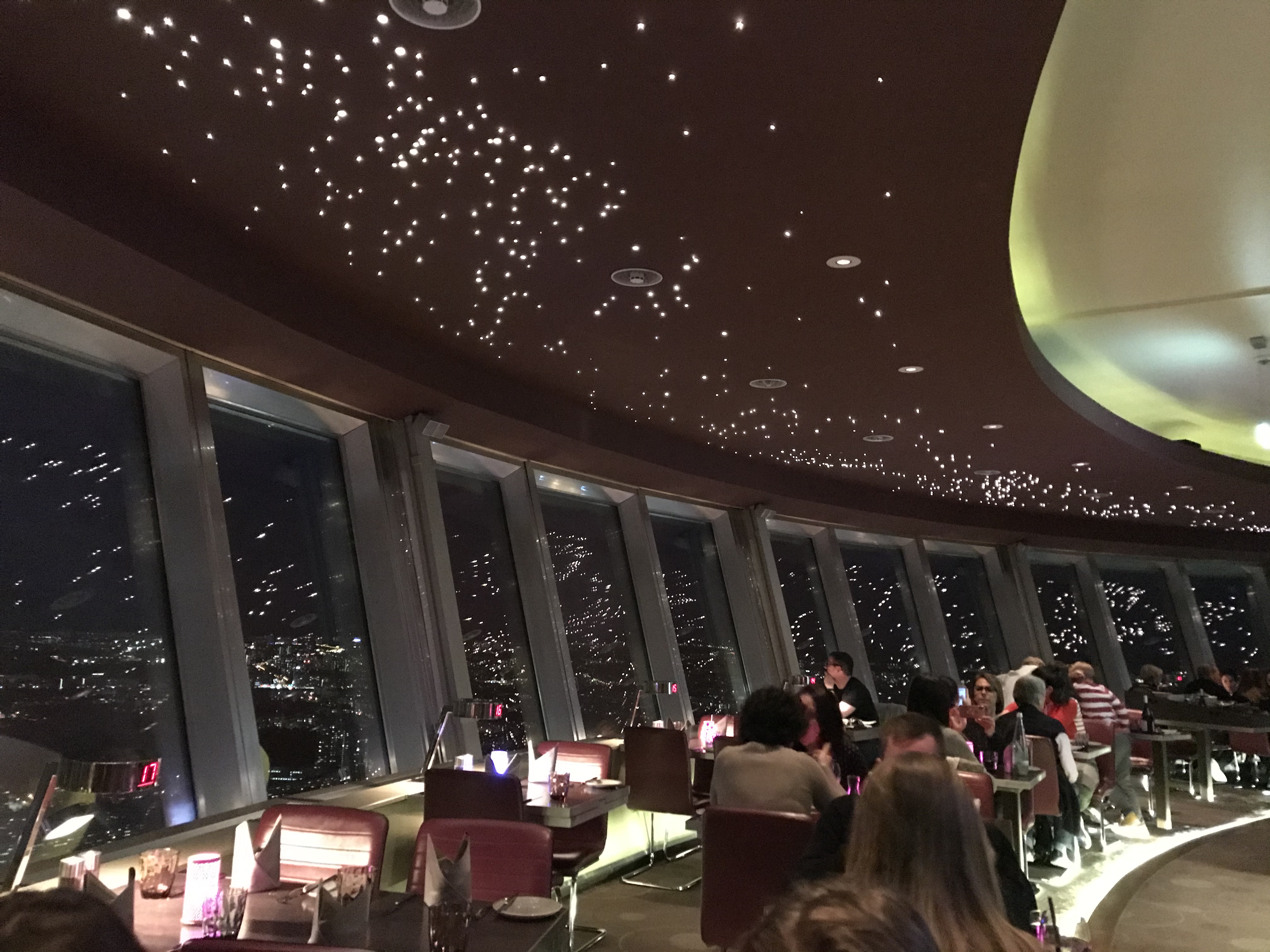
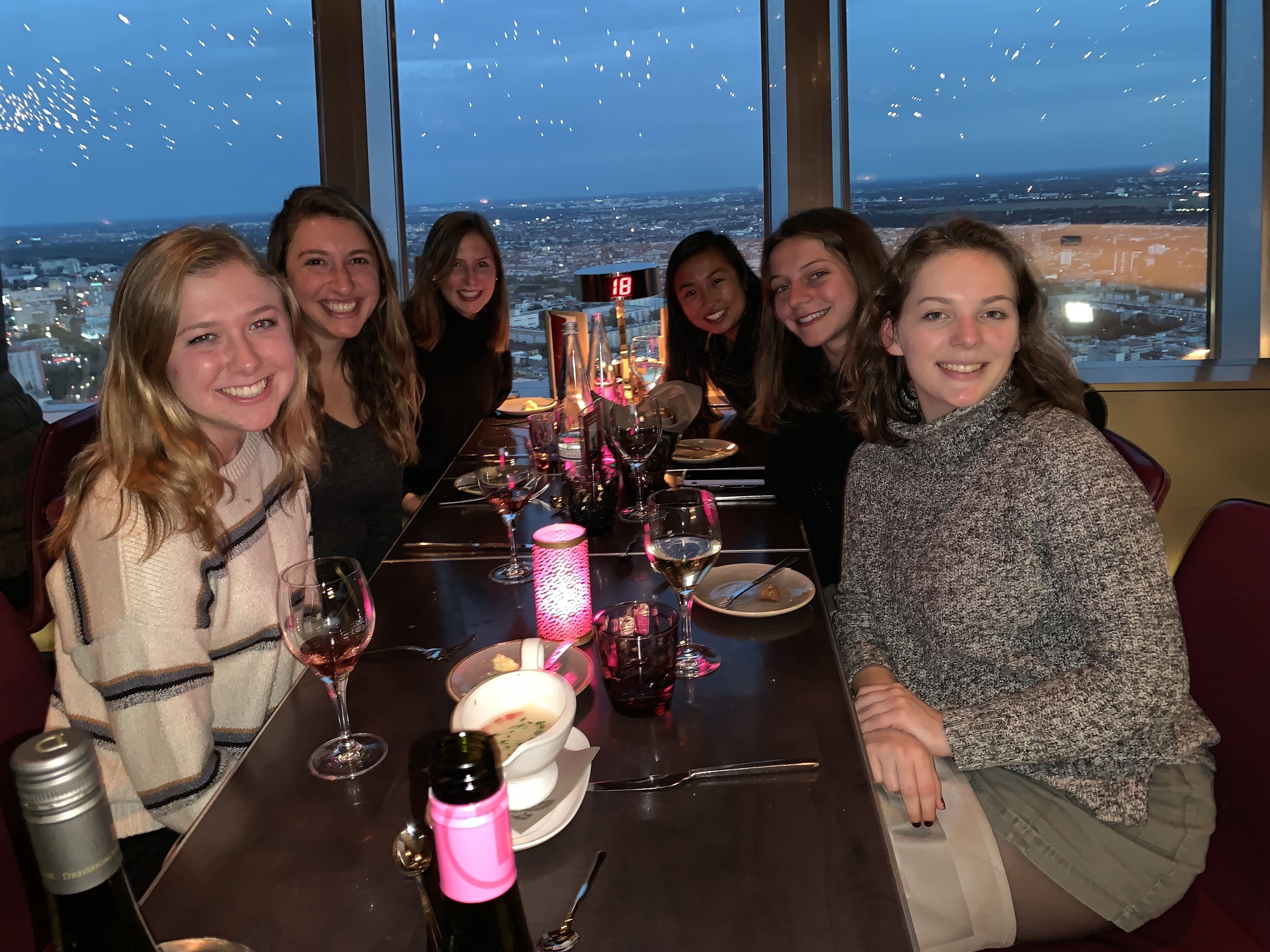
We left bright and early Sunday morning for Berlin! Upon arrival, we visited the Berlin wall (and took lots of pictures) – one side was graffiti and the other side was commissioned artwork (super cool). My friends and I went for lunch at Burgermeister, a tiny but famous burger joint located in an old train station bathroom in the middle of the street. The line was really long (so we knew it must be good), and it lived up to expectations! After lunch, my class went on an alternative walking tour of the city, where we learned the history and culture of Berlin through the stories told by street art. Berlin is such an interesting city, because its history feels so recent yet also steeped in politics. We toured the former East and West Berlin and heard stories of the “death strip” between the two sections of the wall. After the tour, we went to a mini-Oktoberfest near the city center (NOTHING like the real one haha). That evening, DIS treated us to a German dinner (meat & potatoes) in the TV Tower in a rotating restaurant with a 360 degree view of the city. The tower was constructed in the late 1960s by the government of East Germany as a symbol of Communist power, but it remains today as a landmark of the city, a broadcasting station, and the fourth-tallest structure in Europe (1200 feet tall!).
Monday:
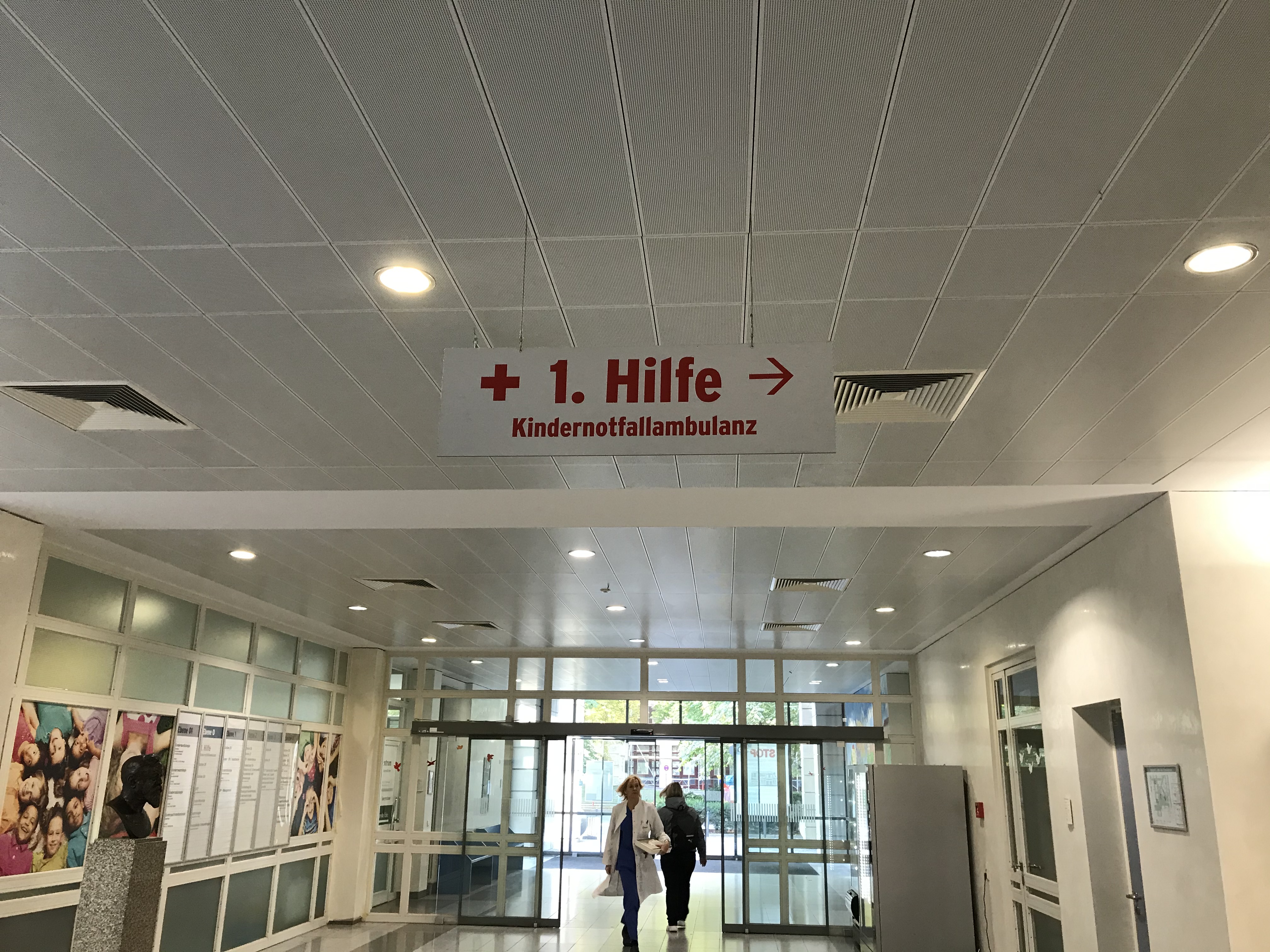
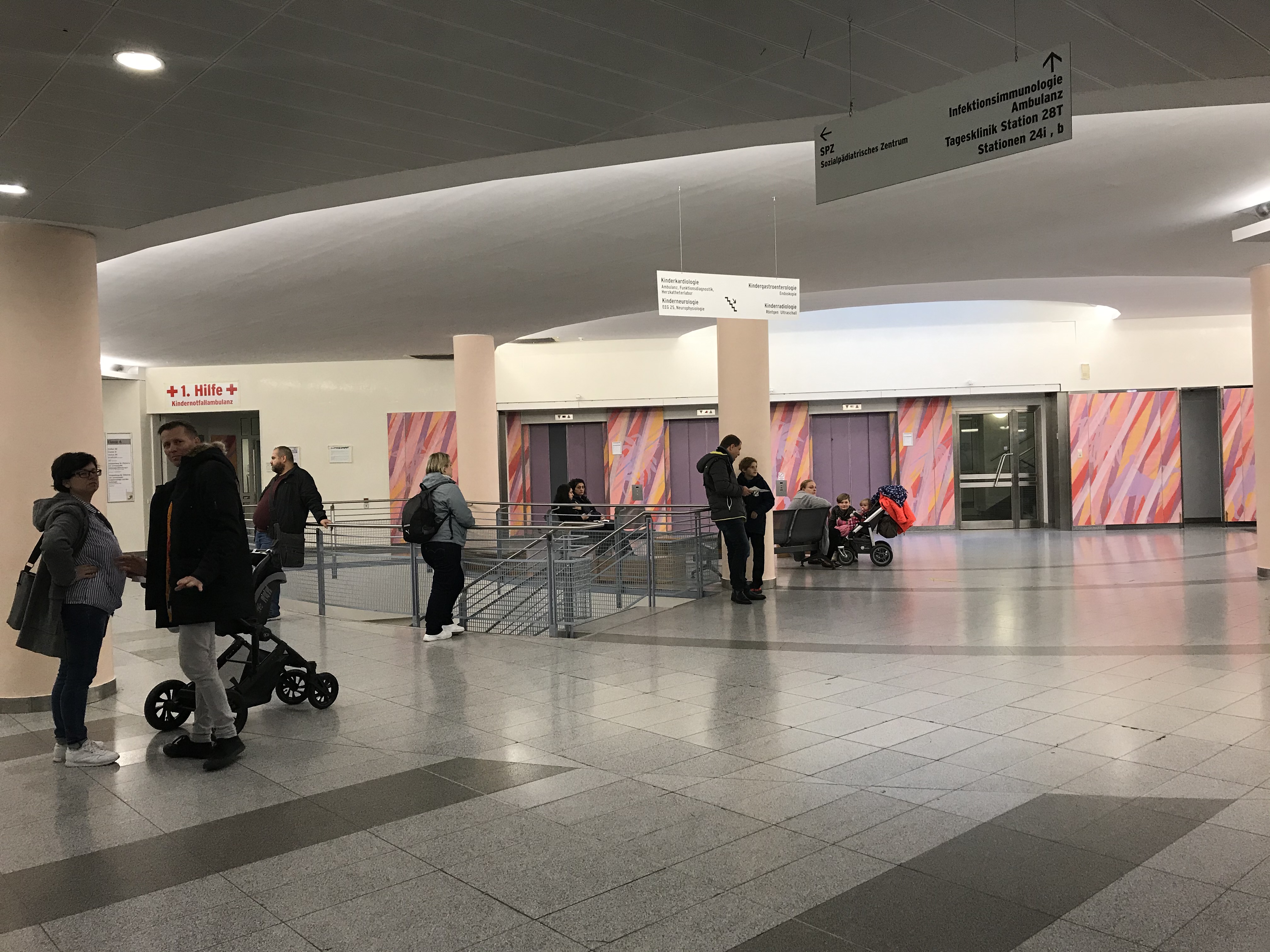
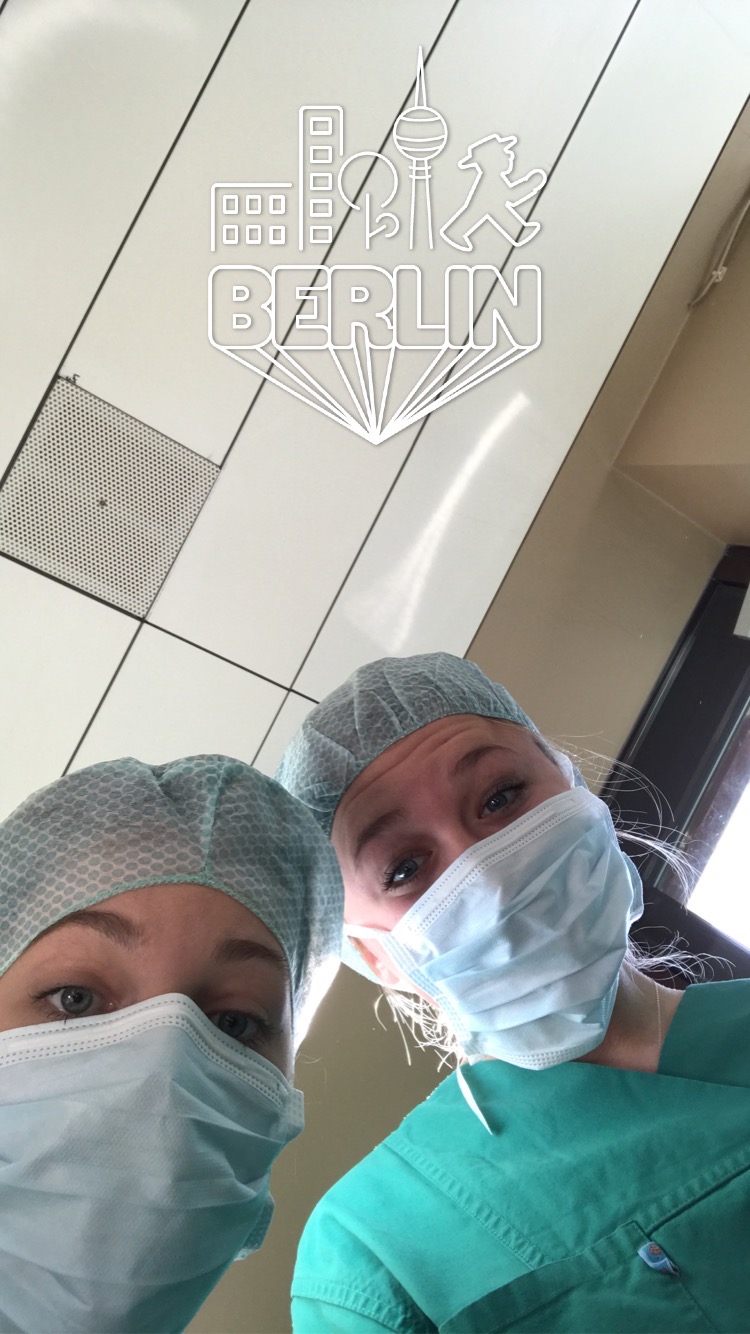
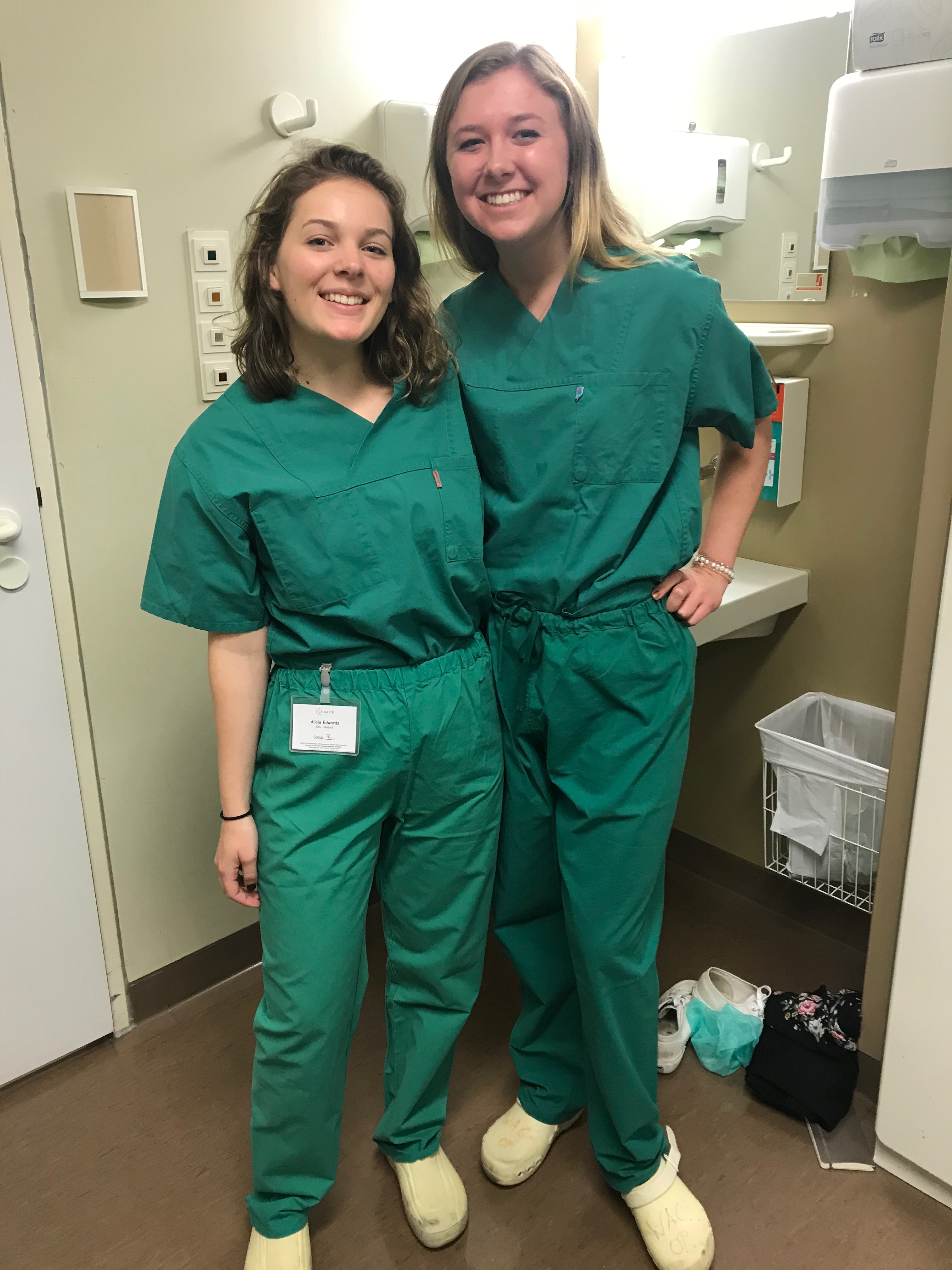
On Monday morning, we visited Charité Hospital, where we went to the Department of Pediatric Oncology & Hematology and the Clinic for Anesthesiology & Operative Intense Medicine (aka the ICU). Charité is the fifth-best hospital in the world and one of Germany’s most research-intensive medical institutions. While there, we learned about the structure of the German healthcare system and their emphasis on the principle of solidarity. Everyone pays in and everyone benefits, regardless of age or pre-existing conditions. We got to observe a “tele-ICU” consult, where a Charité physician video-chatted with a rural German hospital to virtually “round” on their patients. We also toured their “circadian rhythm” ICU rooms, which were quiet, spacious, and lit based on time of day. These high-tech features are part of Charité’s research project ERIC (Enhanced Recovery after Intensive Care) to improve ICU outcomes and decrease PICS (post-intensive care syndrome). Alicia & I also got to shadow an open heart surgery, where we watched the surgeons suture a vein from the leg onto the heart to bypass the right coronary artery. I was standing right up close, and the surgeons pointed out all the anatomy to us (I recognized a lot from our MPP cardiology lecture and from shadowing heart surgery this summer 🙂 ).
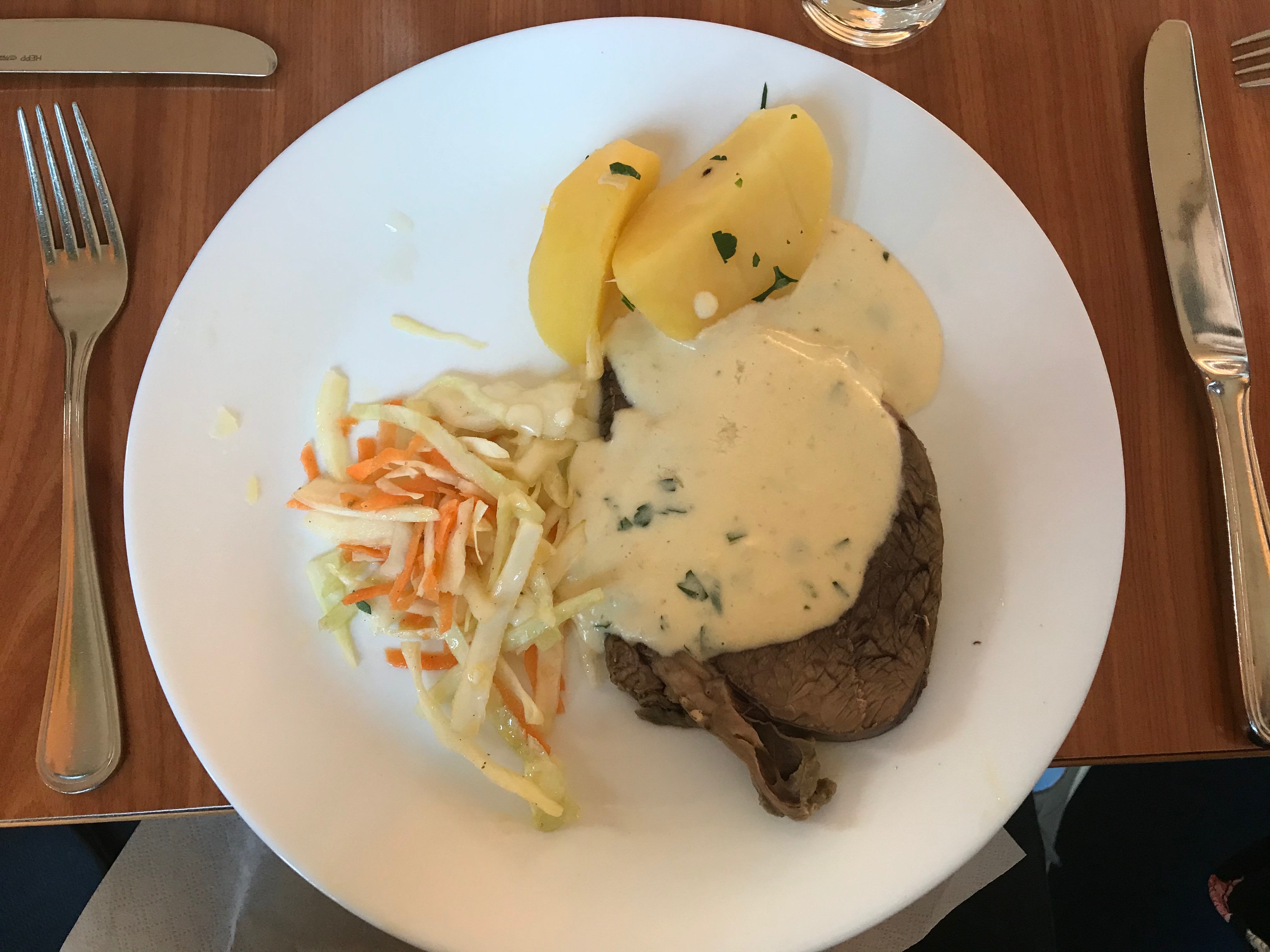
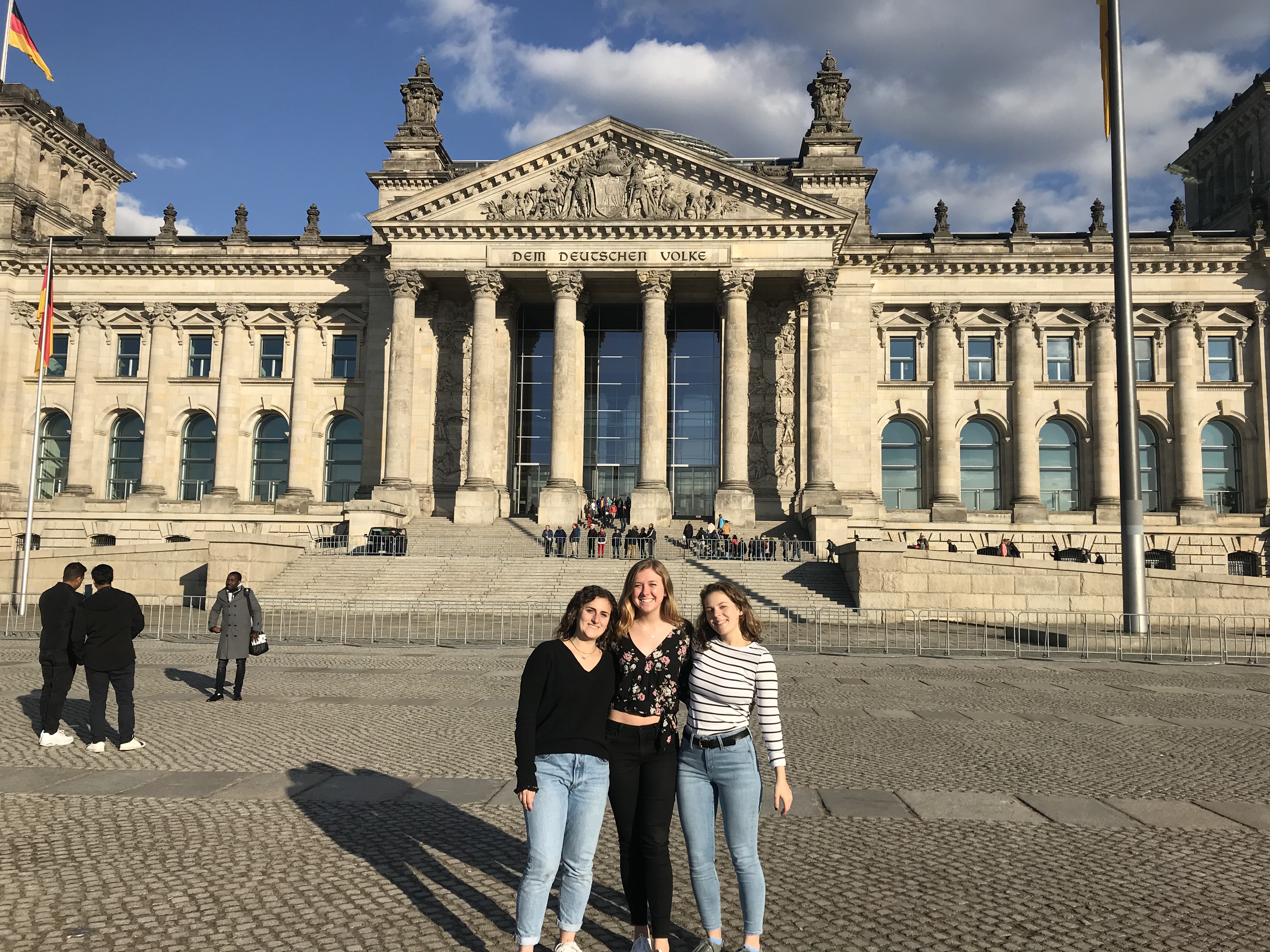
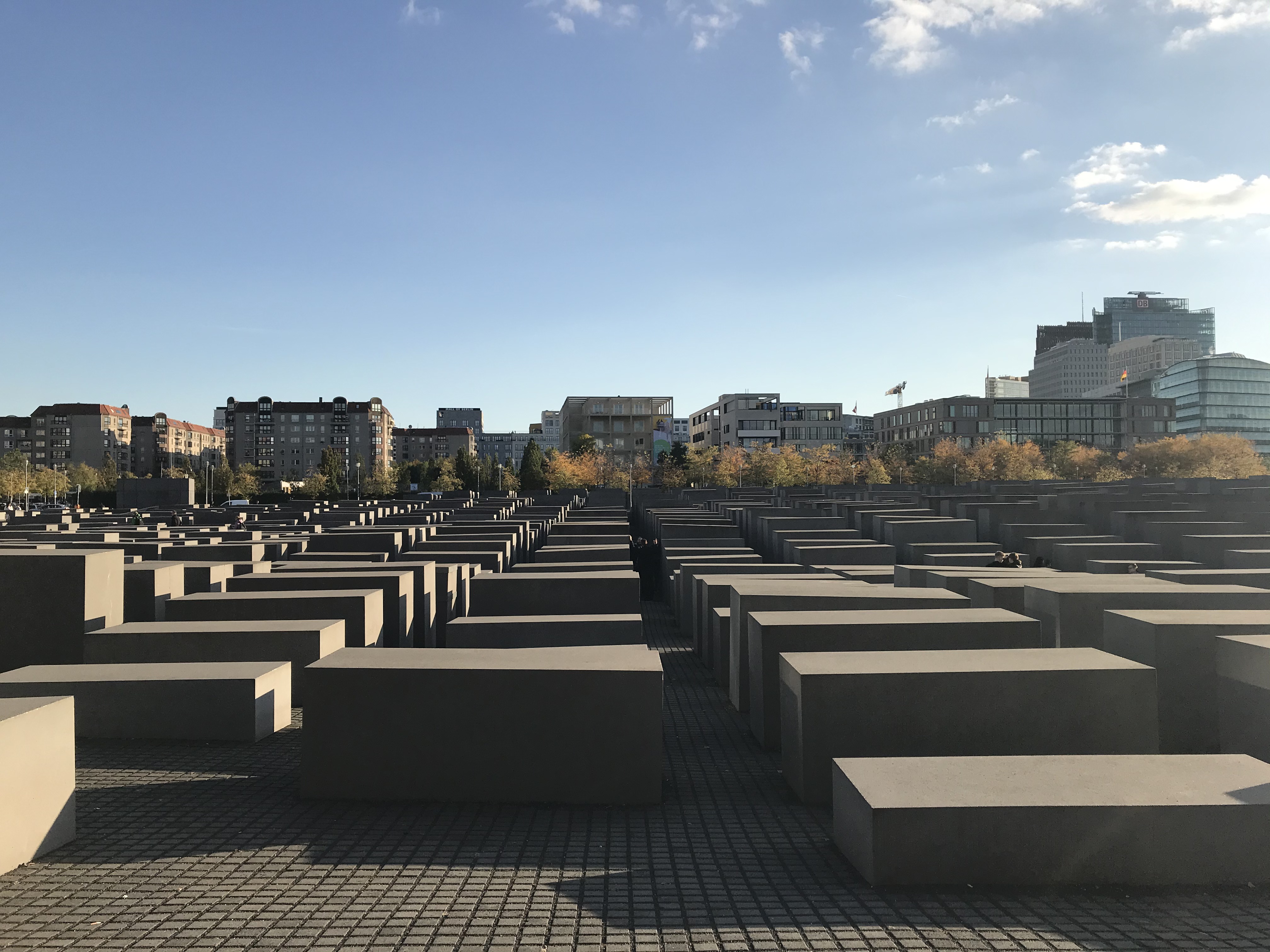
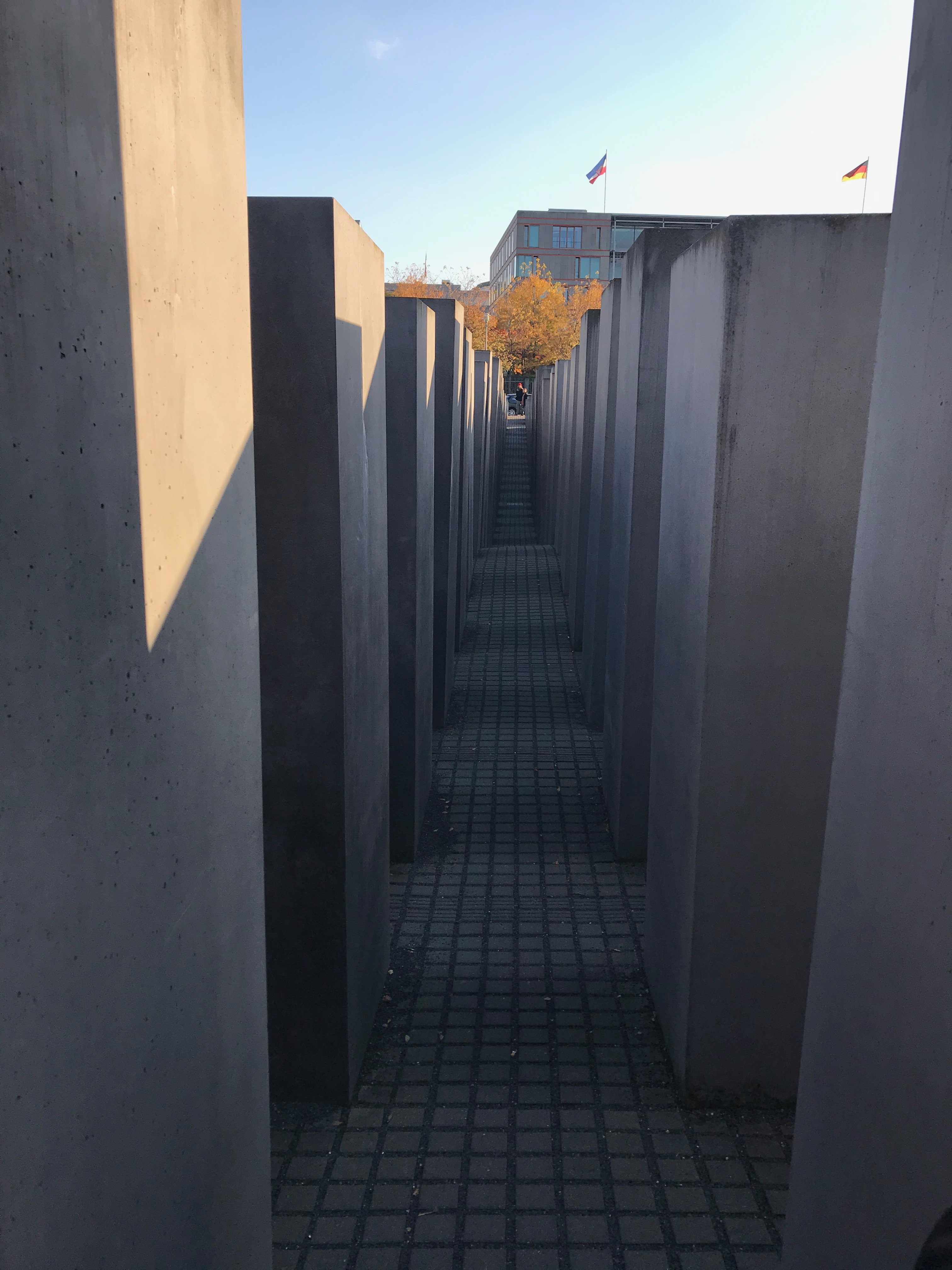
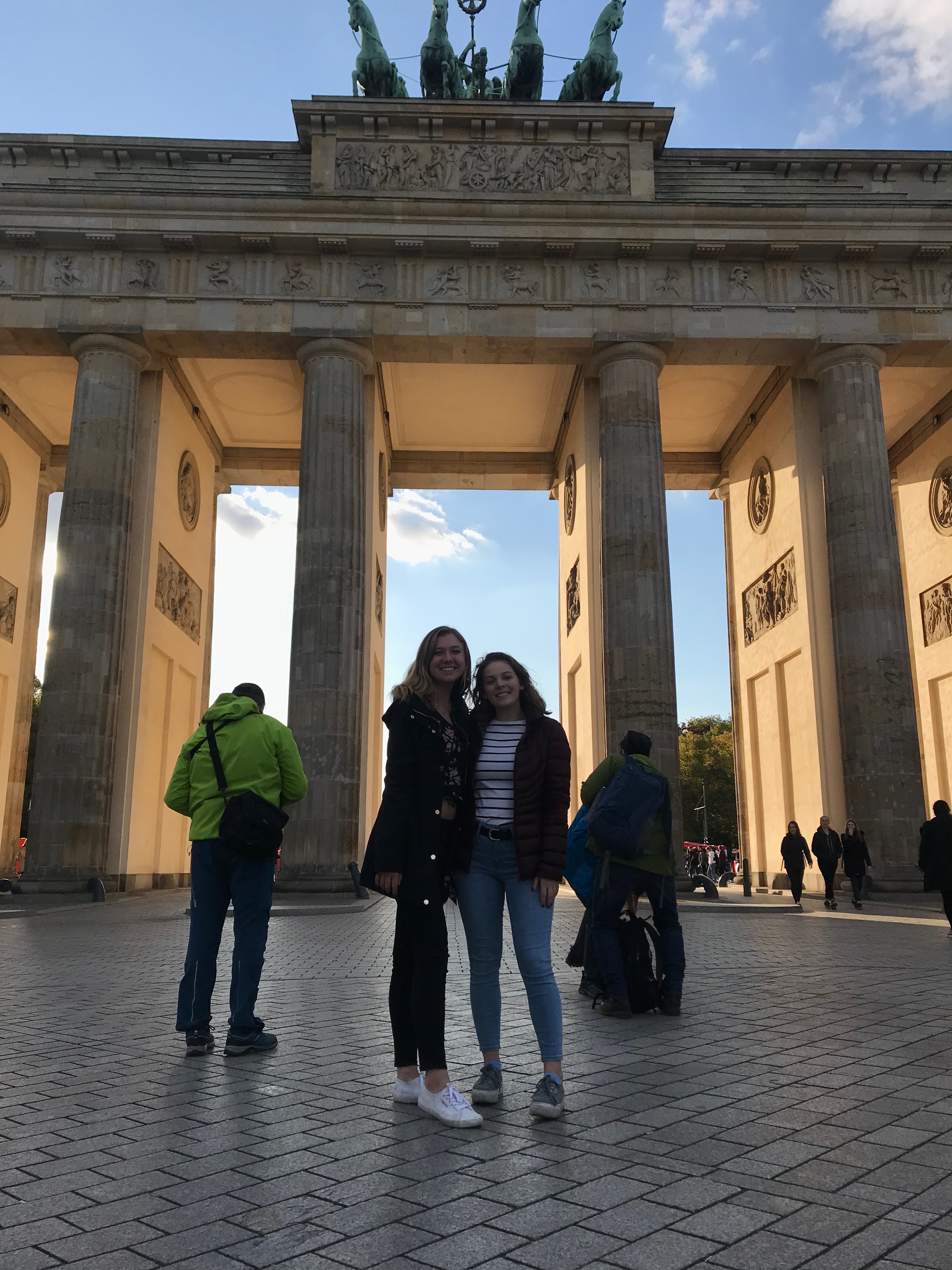
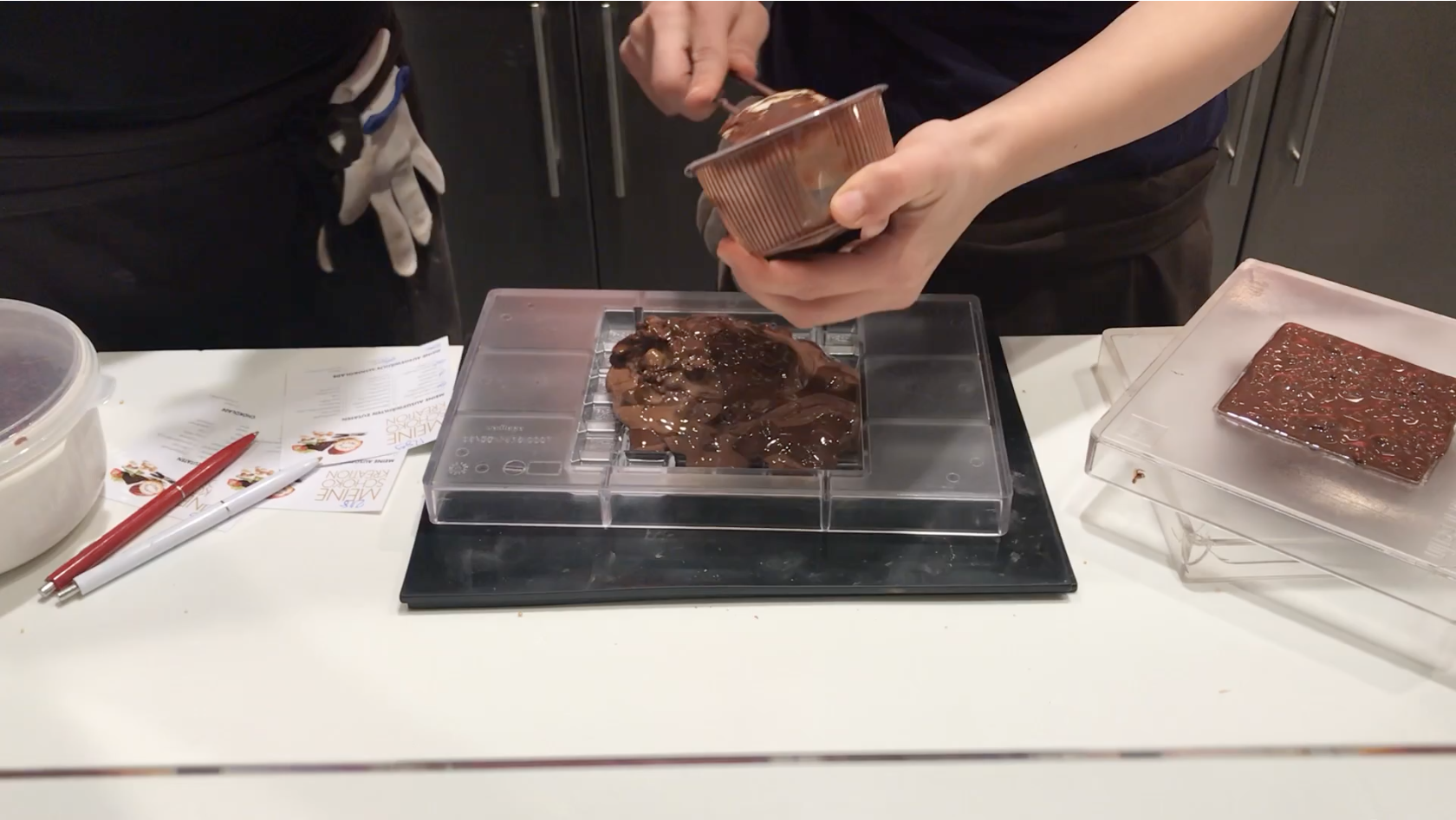
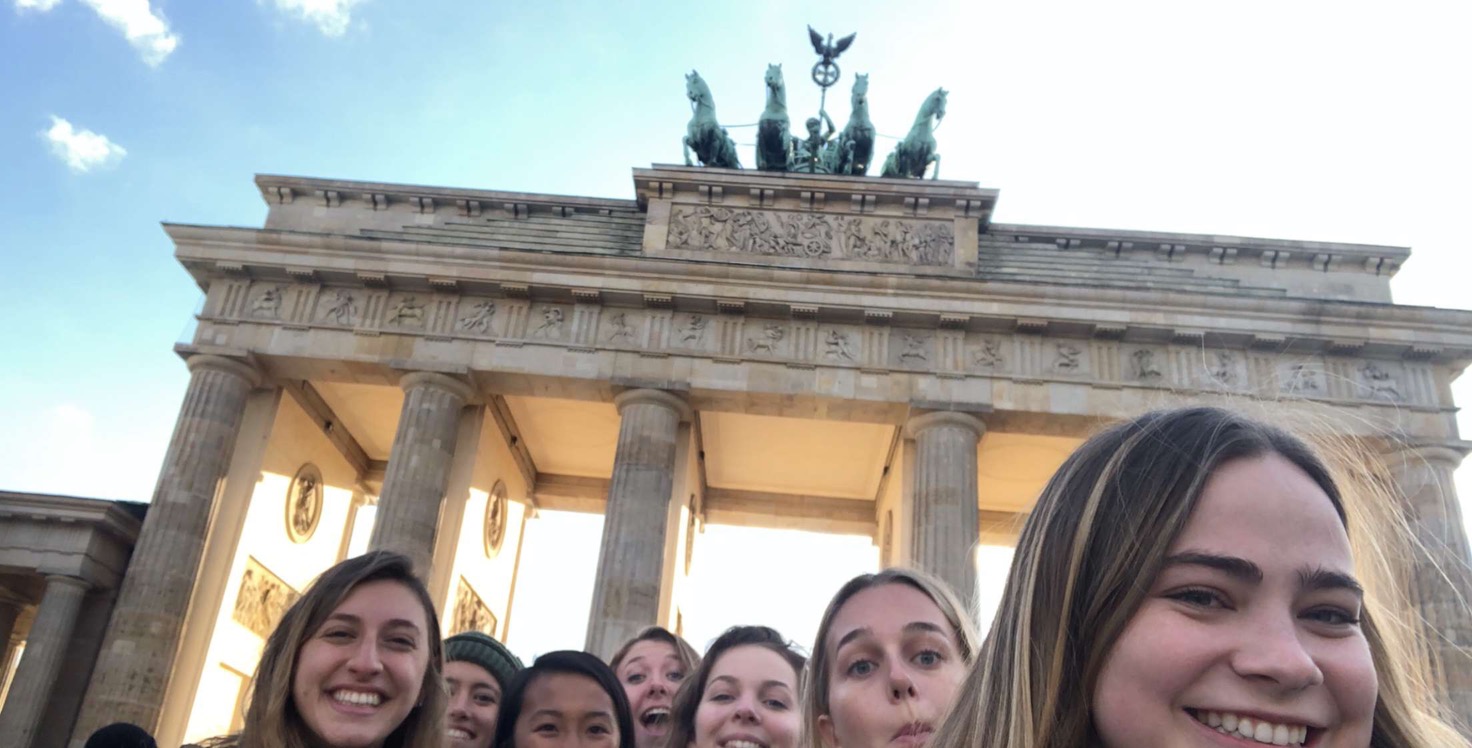
After Charité, we went for a class lunch at Restaurant Cabinett, where we ate even more German food (meat & potatoes once again). We then visited some famous Berlin sites – the Brandenburg Gate, the Memorial to the Murdered Jews of Europe (very powerful), and the Reichstag building (home of the German parliament). My friends and I finished the day by designing our own chocolates at Ritter Sport, a German chocolate brand that’s super popular in Europe (I made a dark chocolate bar with raspberries, almonds, and cornflakes and proceeded to eat the entire thing immediately – it was fabulous). That night, we went to Tresor, a famous club in Berlin, where I met some new German, Canadian, and French friends (I got to practice my French for a couple hours – good preparation for Brussels this weekend!). The Germans I met in line were super nice and really fun to dance with. 🙂
Tuesday:
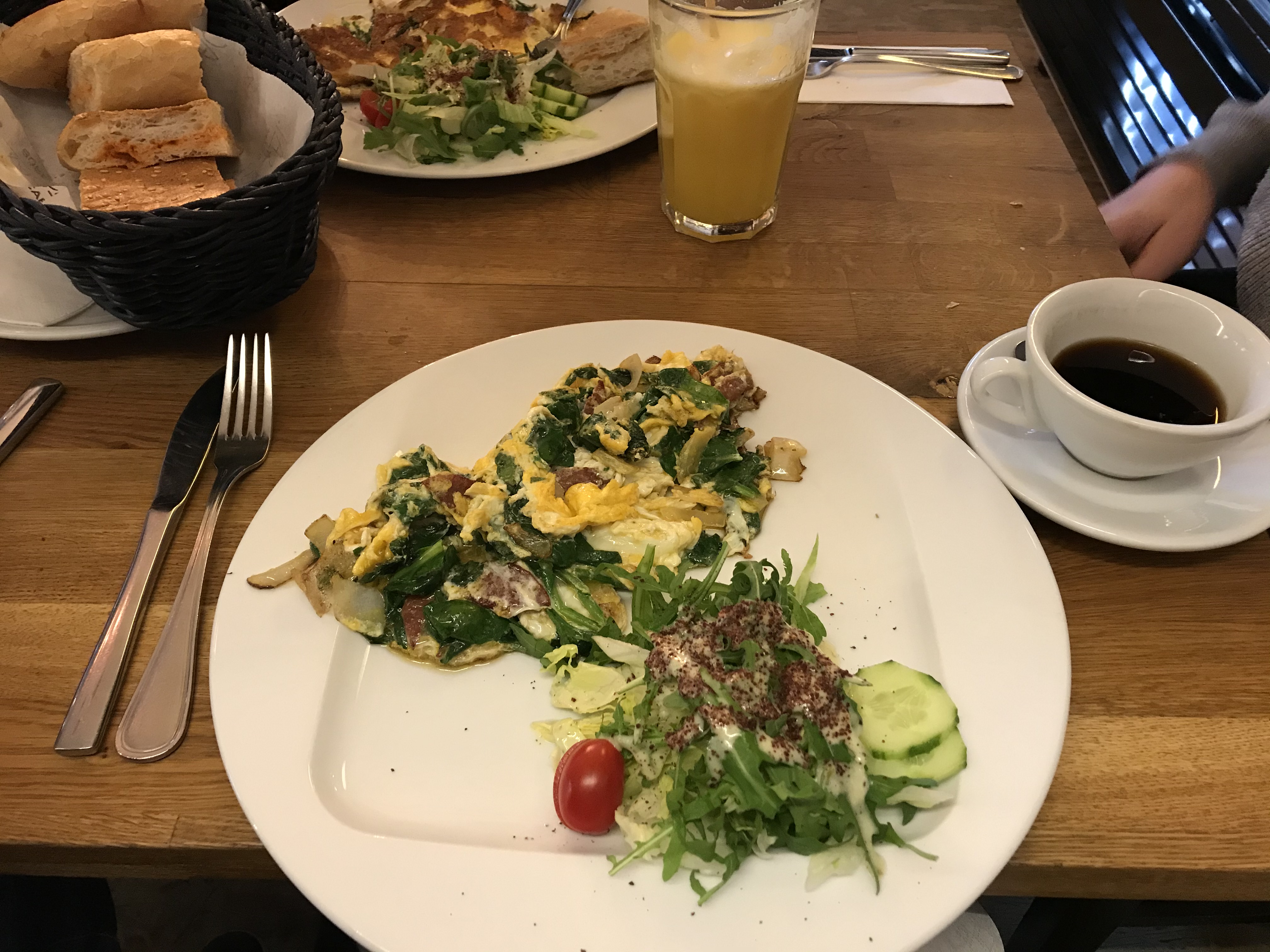
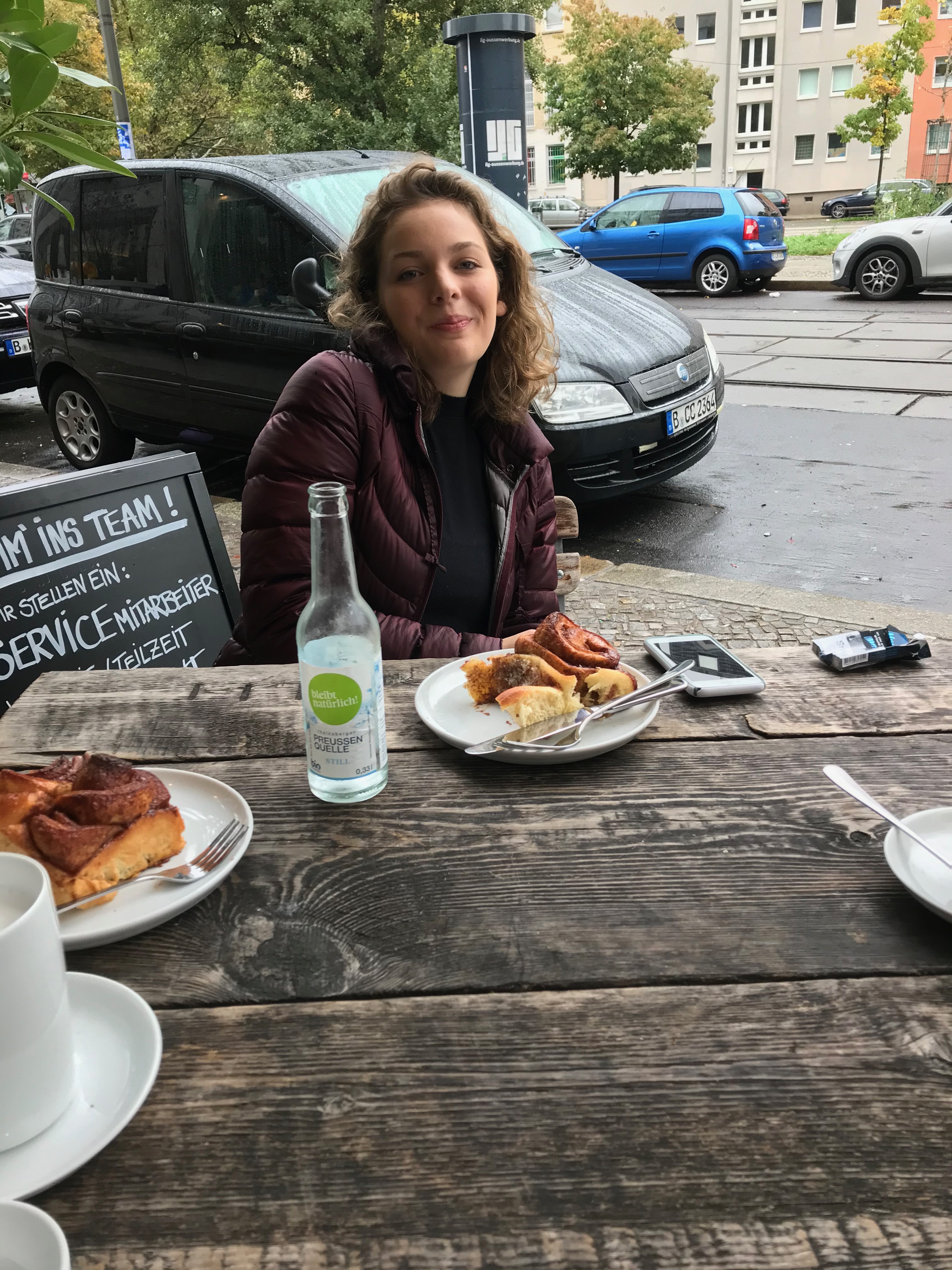
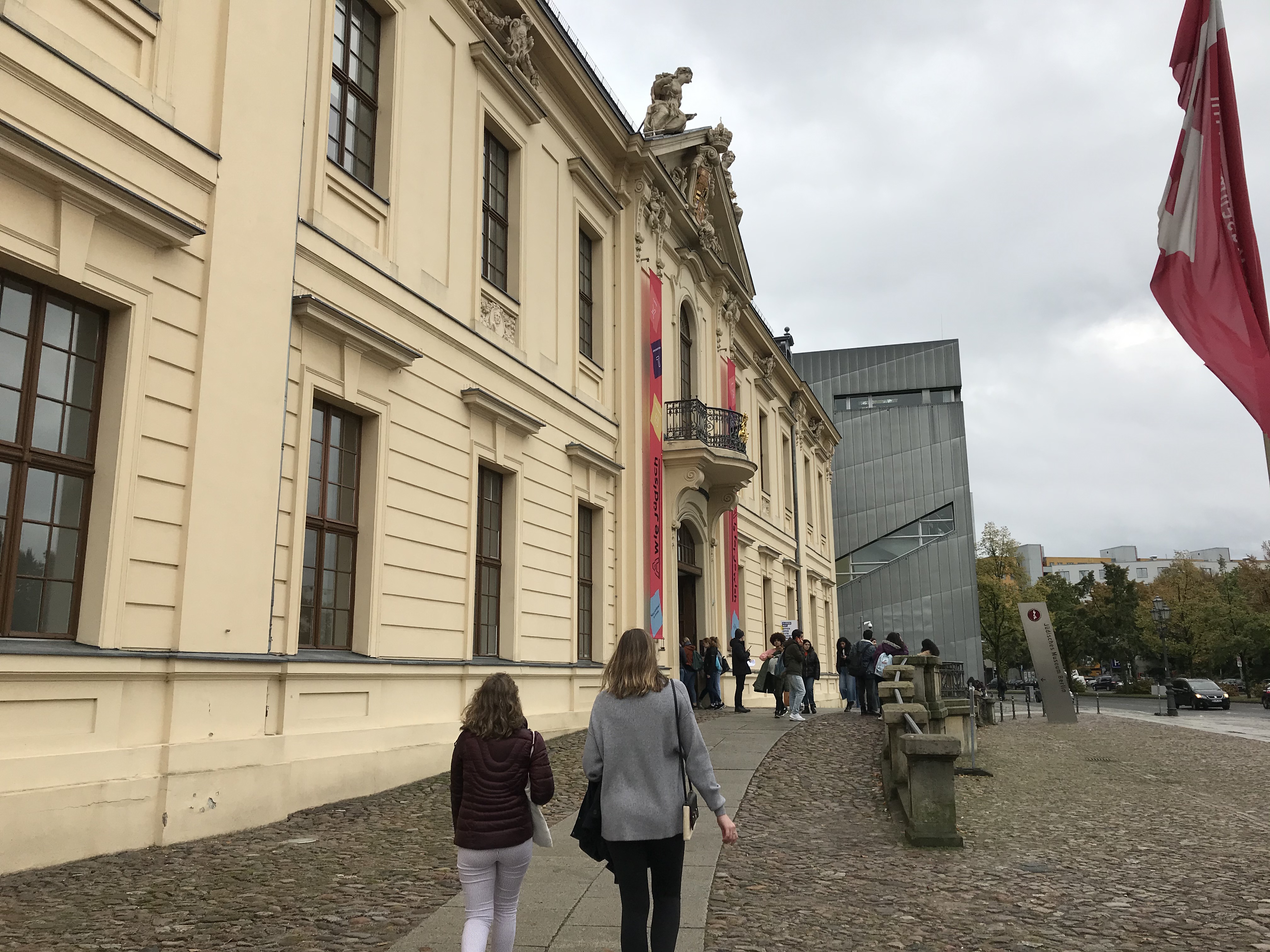
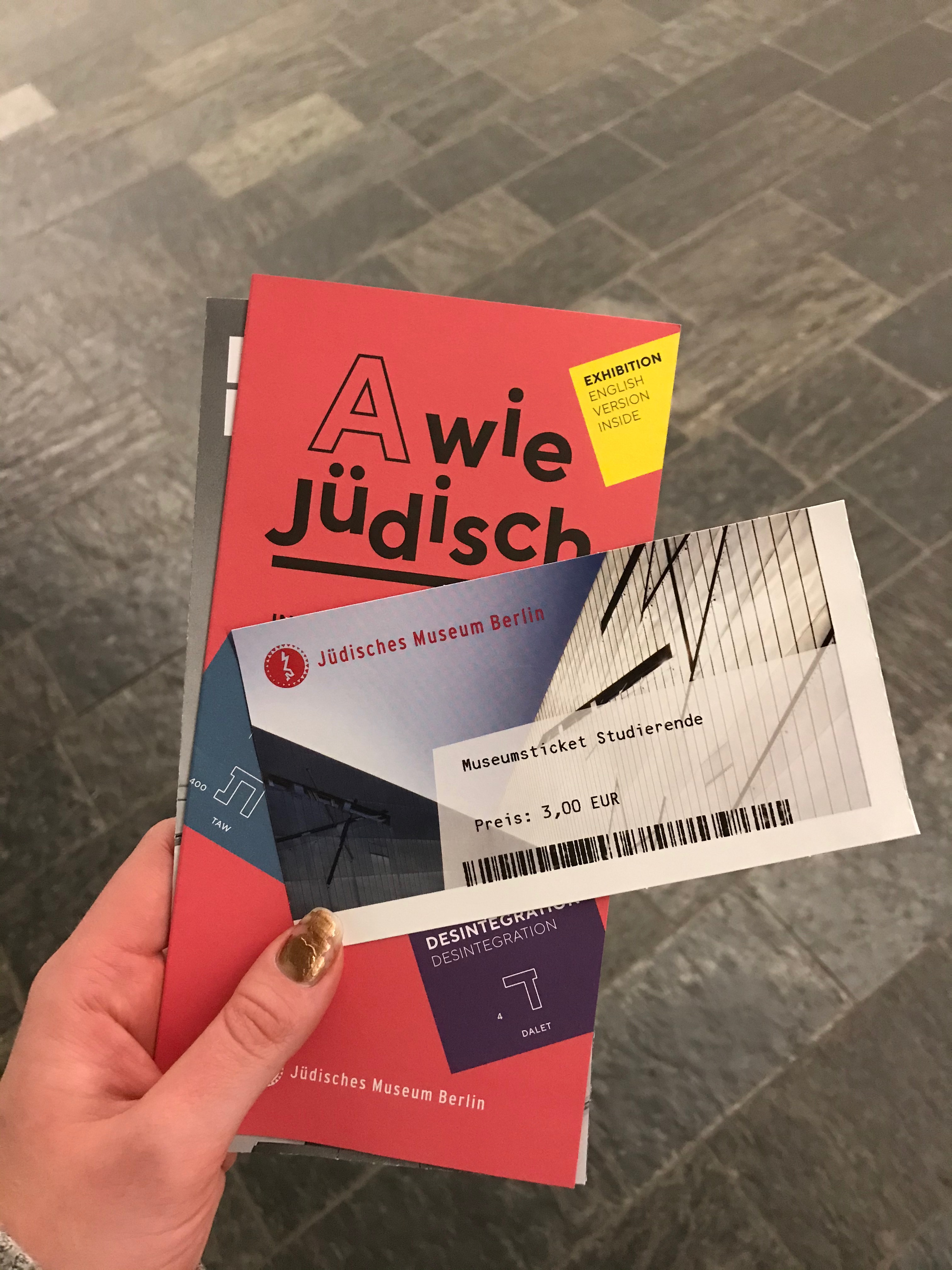
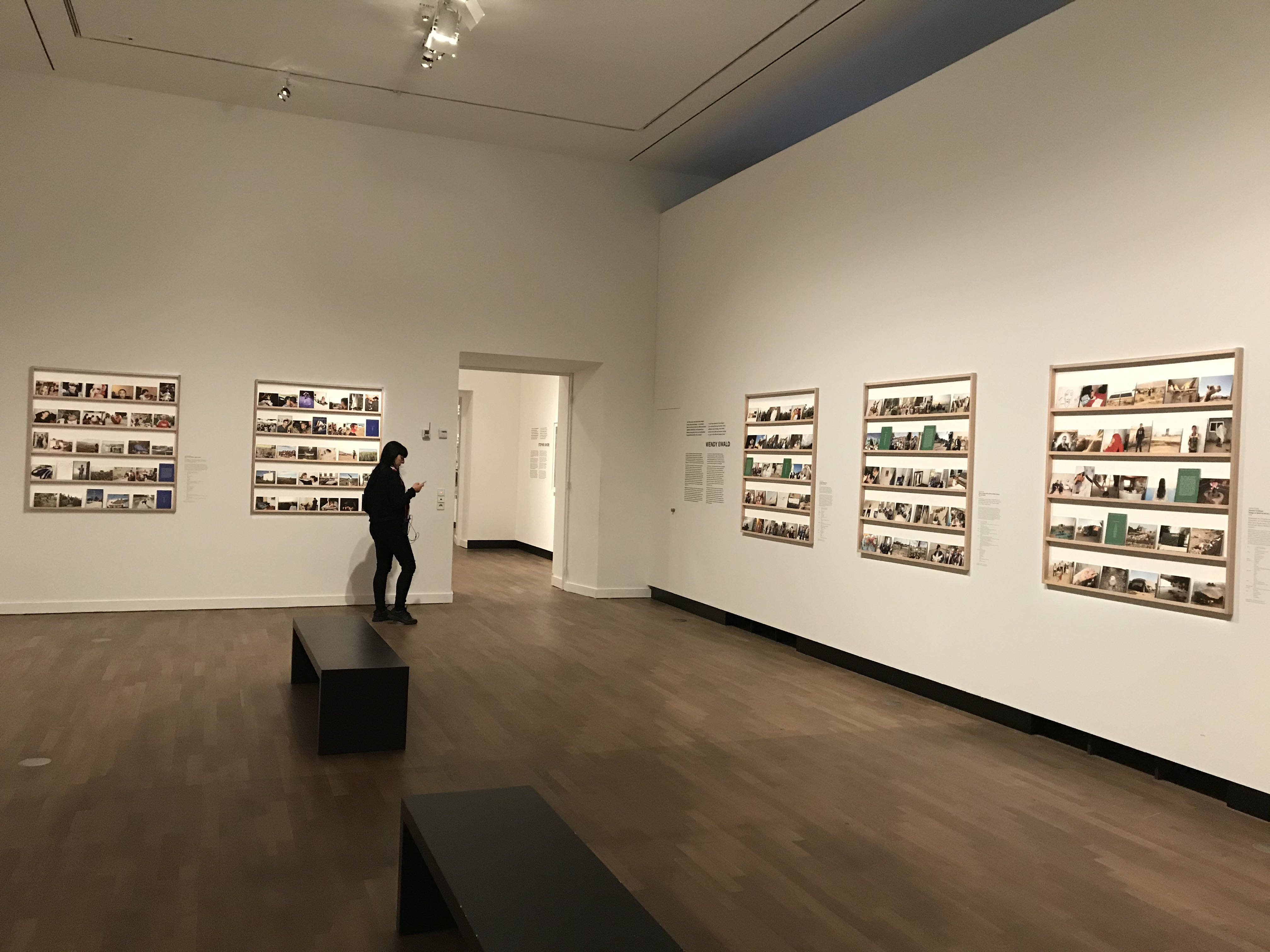
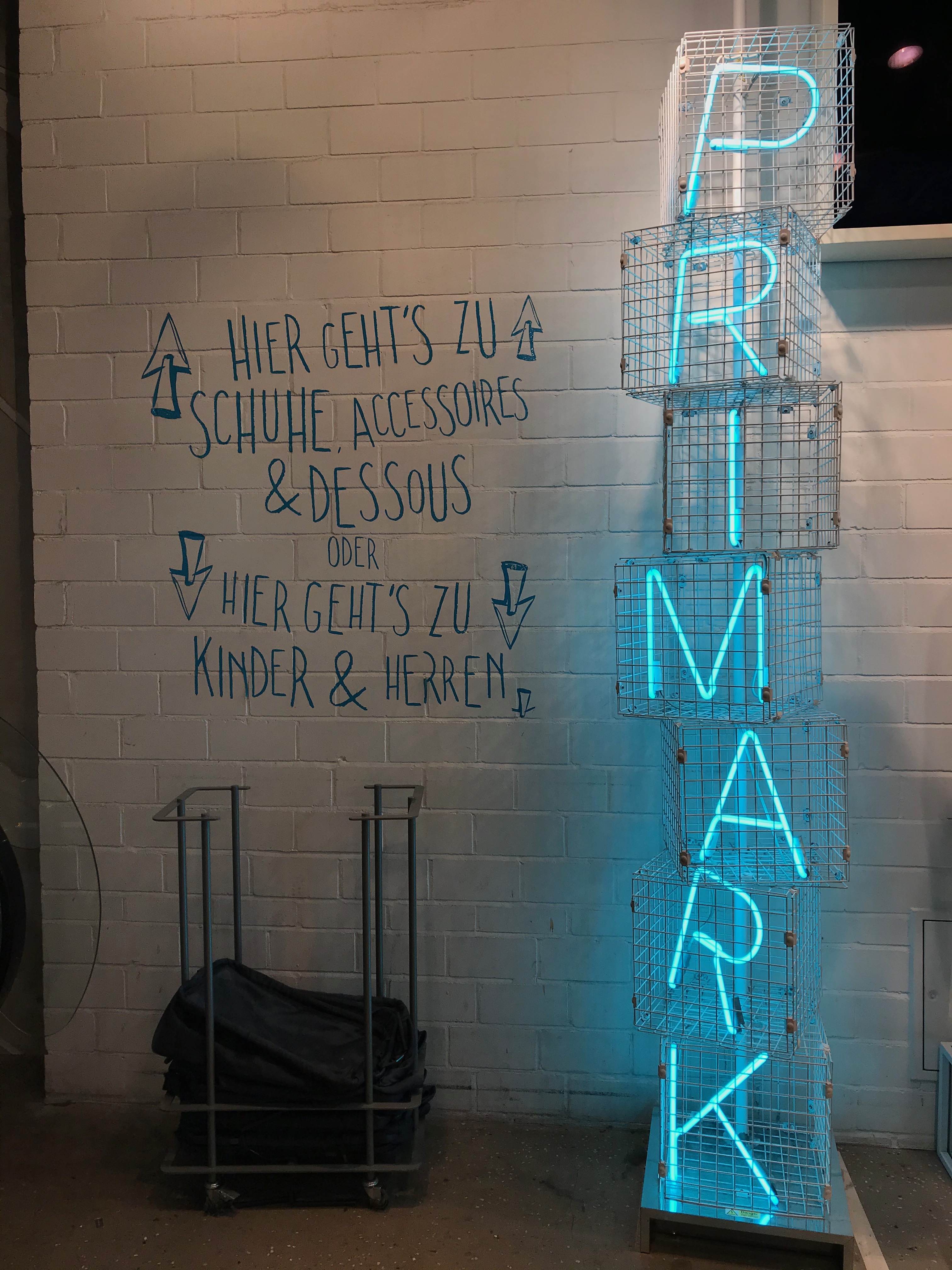
On Tuesday morning, we went to the Department of Interventional Radiology (IR) at Franziskus-Krankenhaus Hospital, where we got to shadow a procedure – we watched the doctor put a stent in a woman’s ileac artery! He told us that IR is very rewarding for him, because he can make such a big difference in someone’s life with such a small procedure. After the visit, I went to brunch with a few friends at Butterbrot, and then we went to the Jewish museum. The museum was interesting because it focused mainly on contemporary Jewish life, but it also touched on the Holocaust. There was a chamber you could stand in called “the void” that was exceptionally moving. We also got some famous cinnamon buns from Zeit für Brot (but I got chia pudding! health! food!). That night, my friends and I went to Chen Che for dinner, a really good Vietnamese place (Berlin is a very international city). We ended the night shopping at Primark, a sort of European version of Forever 21.
Wednesday:
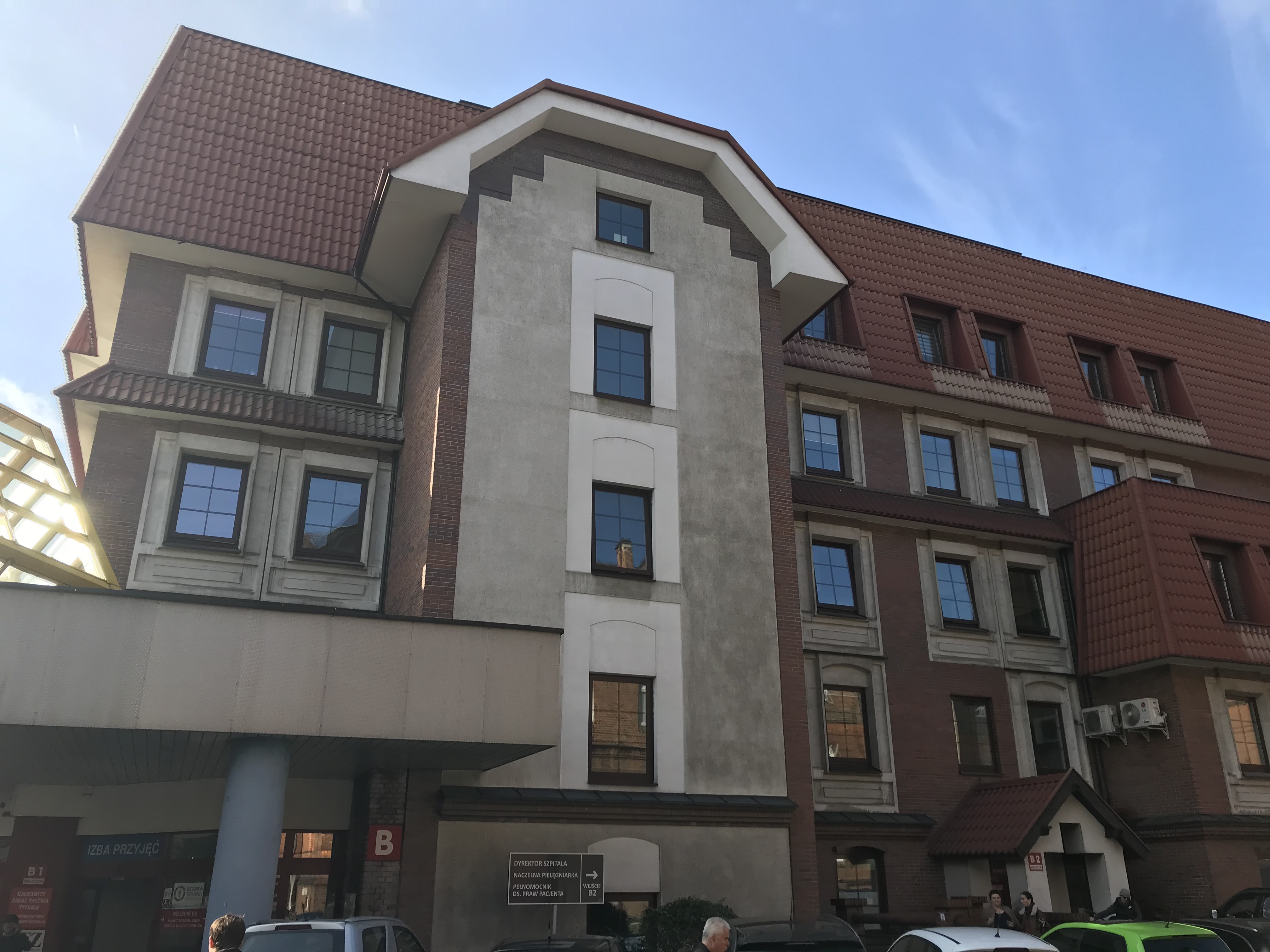
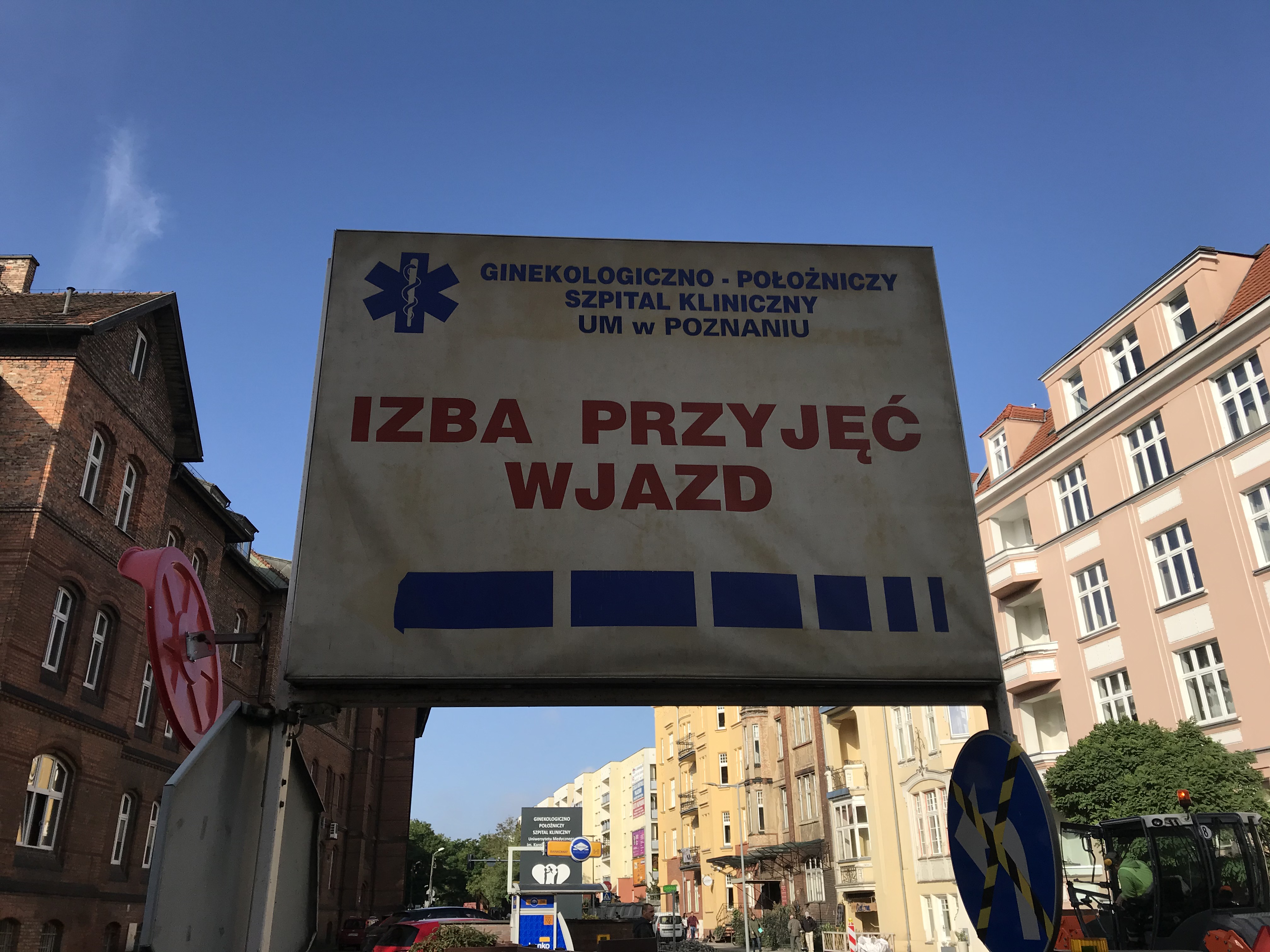
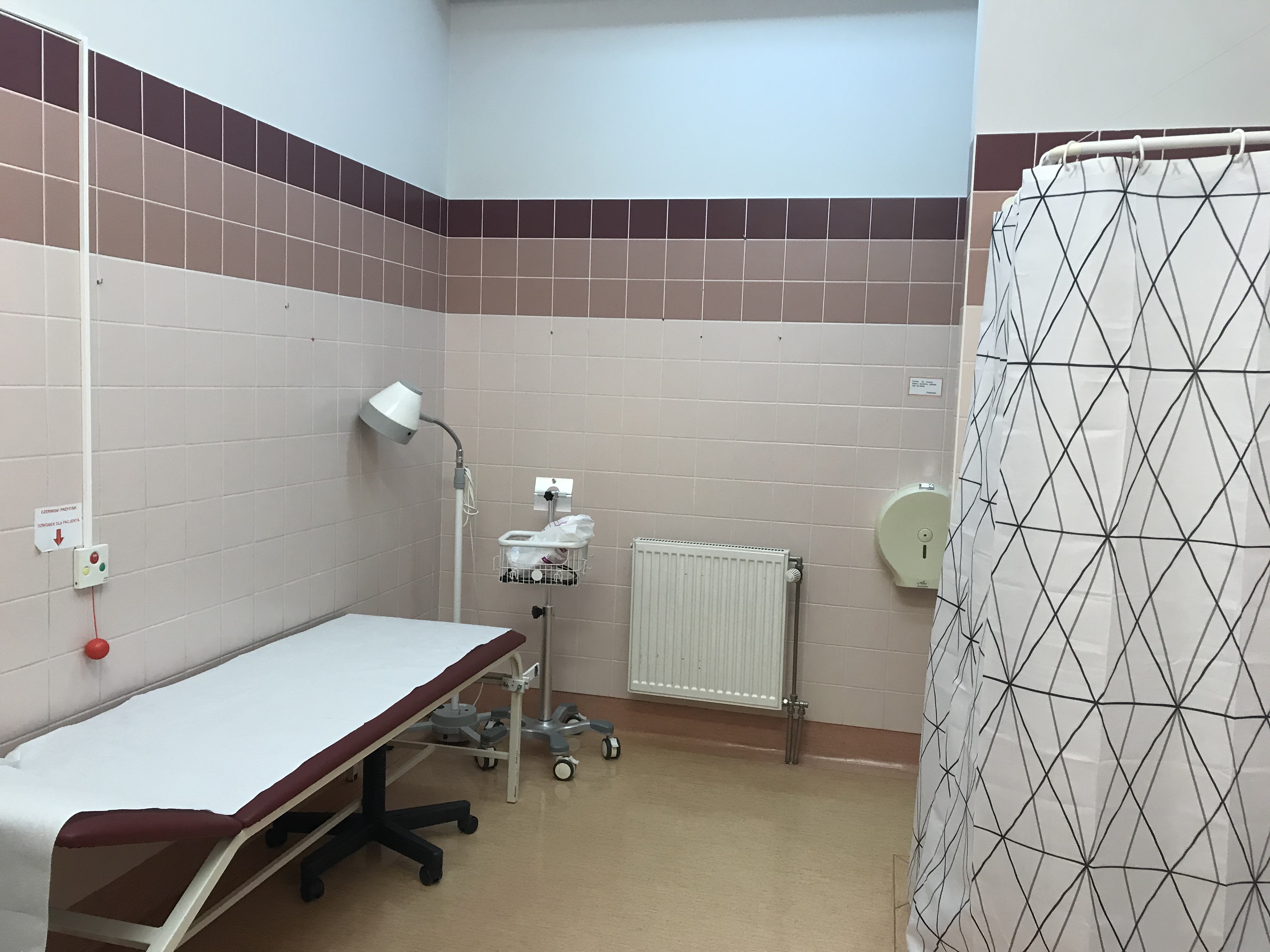
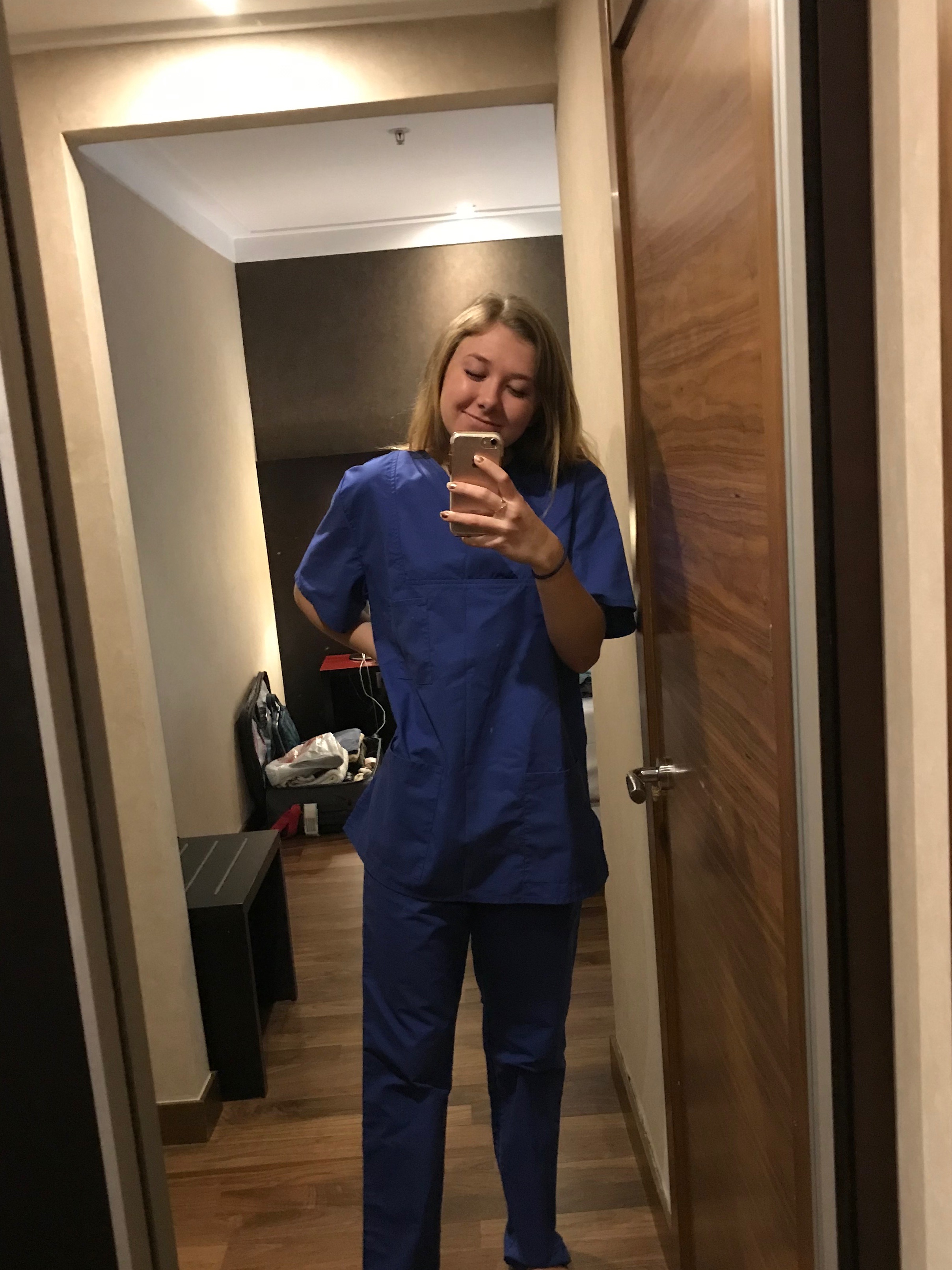
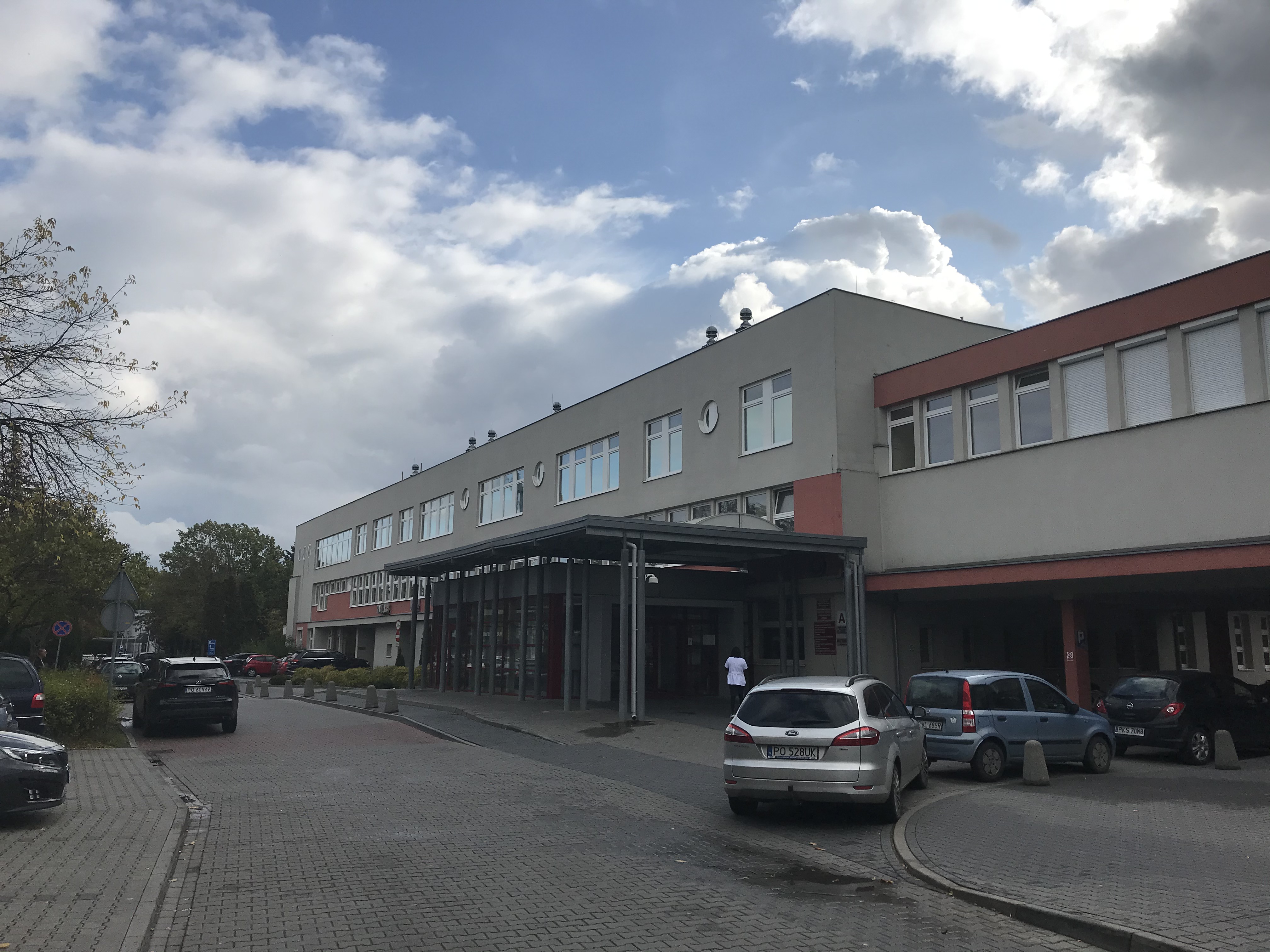
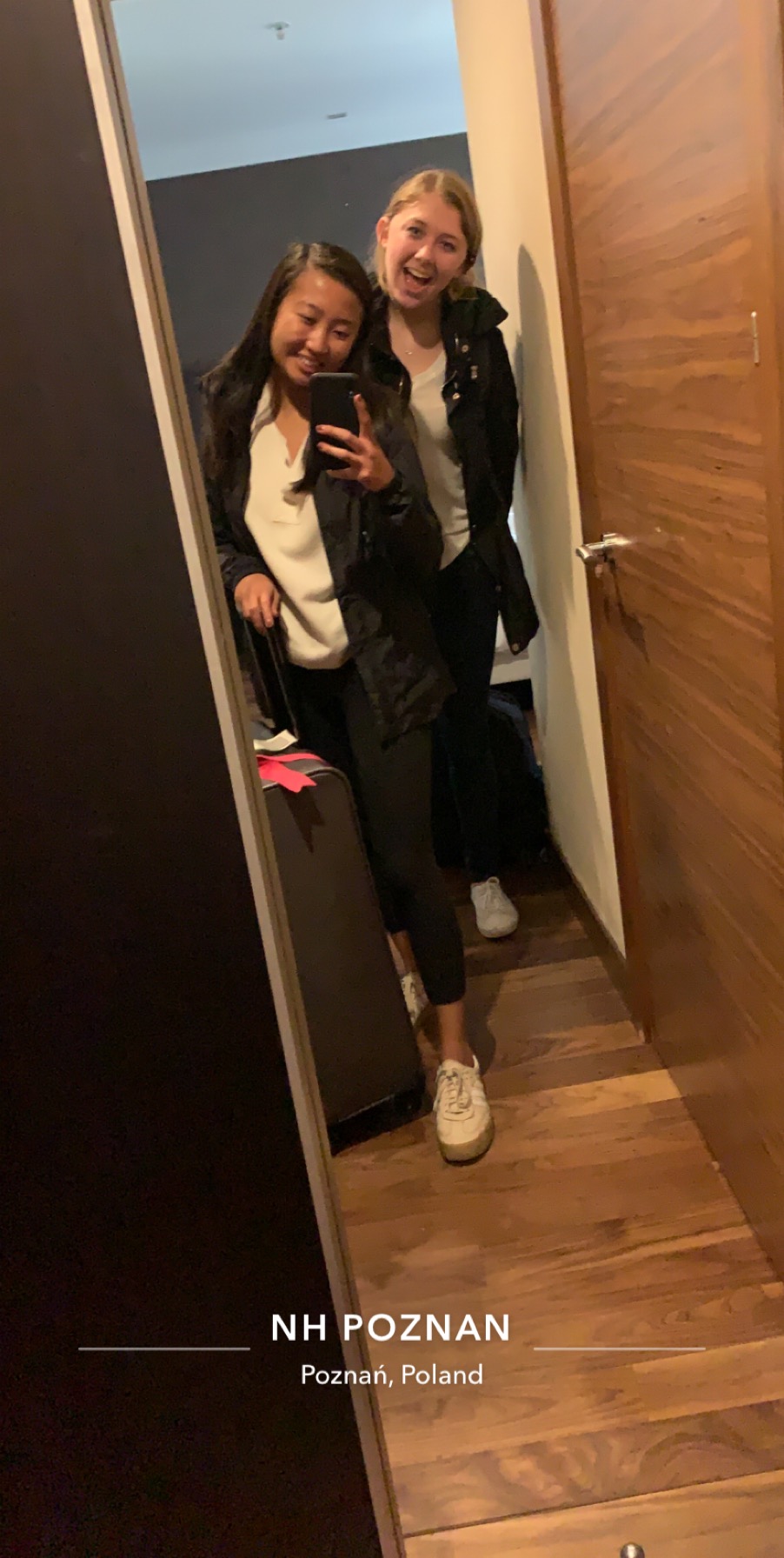
We woke up super early on Wednesday to travel to Poznań, Poland! After our four-hour bus ride, we went to Poznan University of Medical Sciences (PUMS), a prominent Polish medical university. It was starkly different from the German and Danish hospitals my class had visited – it was very crowded, loud, dim, and not as pristine. During our visit to the Department of Gynecology & Perinatology visit, I got to perform an ultrasound on a pregnant woman who was having a C-section in two hours! It was incredible to find the baby’s heart and see it flutter on the monitor. I also palpated the abdomen of a woman who had just given birth a few hours earlier to feel her uterus. We shadowed another ultrasound, where the physician told the mom, “It’s a boy!” The excitement in the room transcended language barriers. The Polish doctor pointed out to us the baby’s brain and showed us how she takes measurements to estimate the fetal weight.
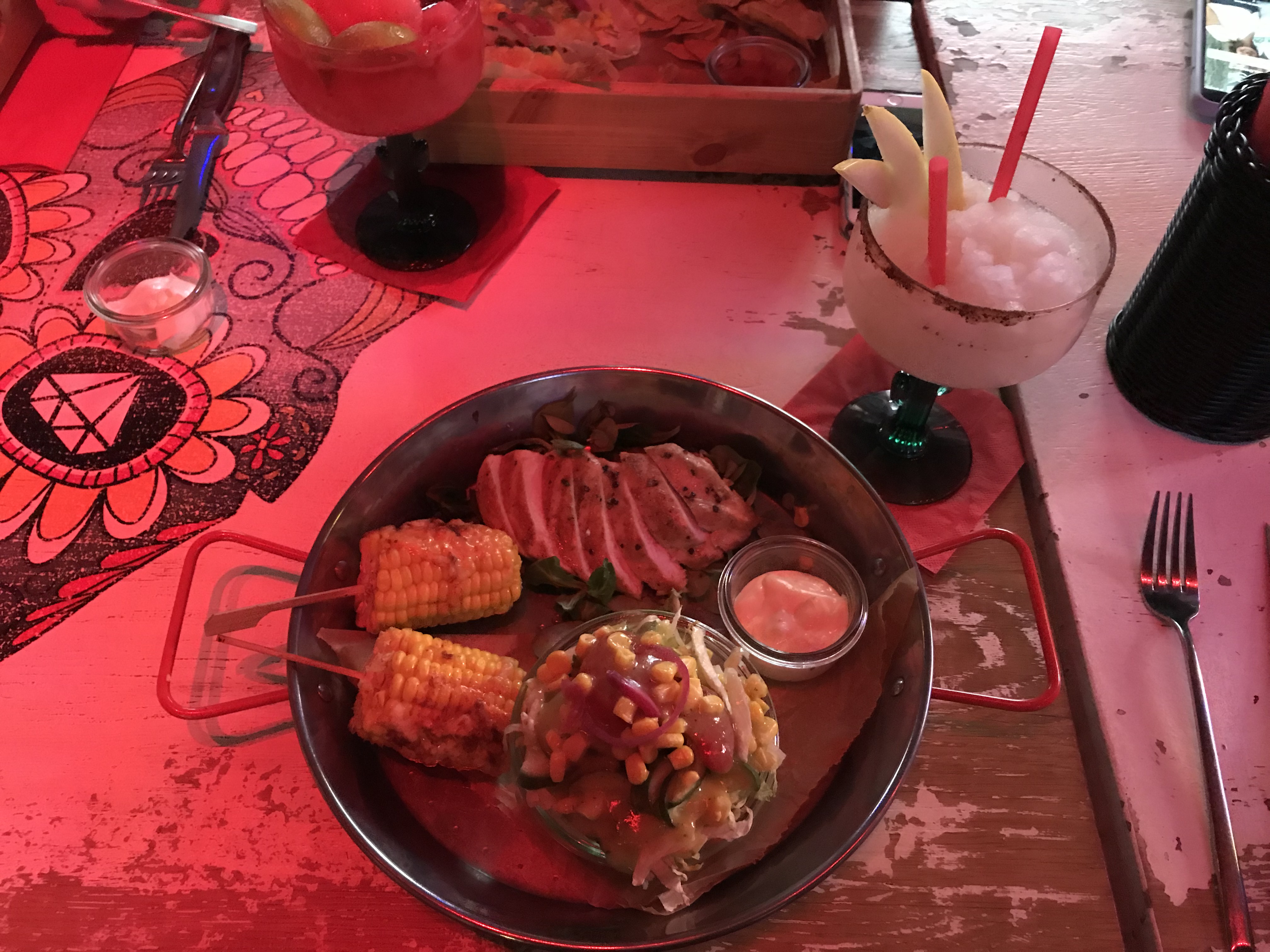
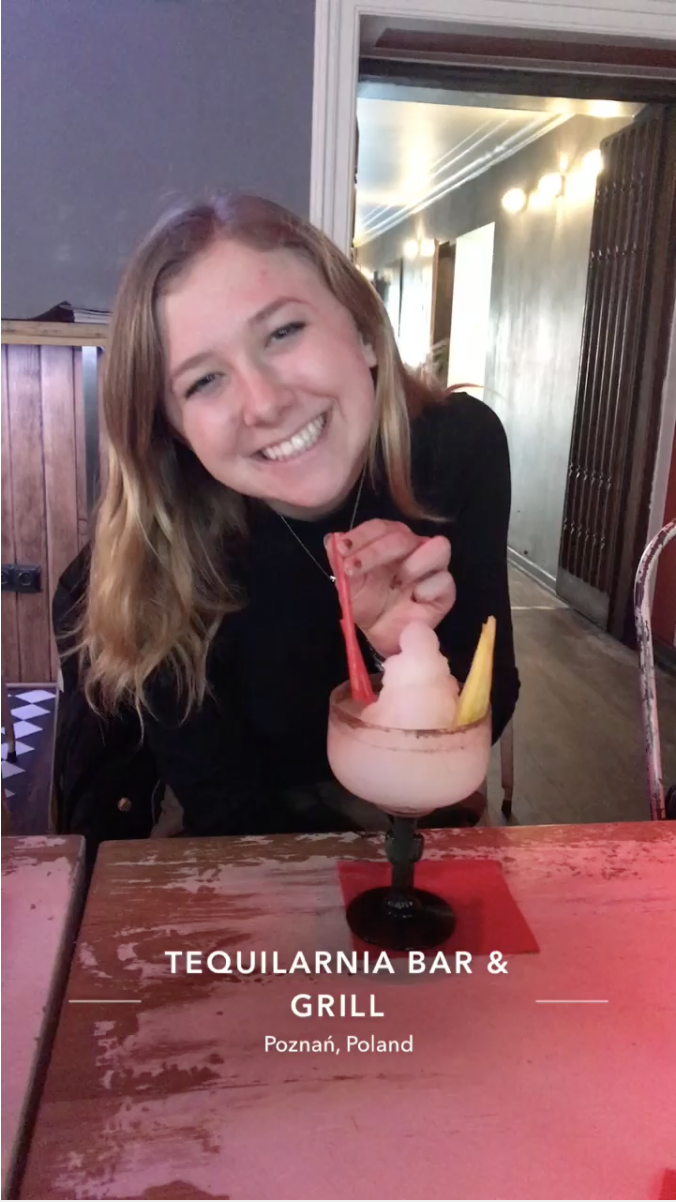
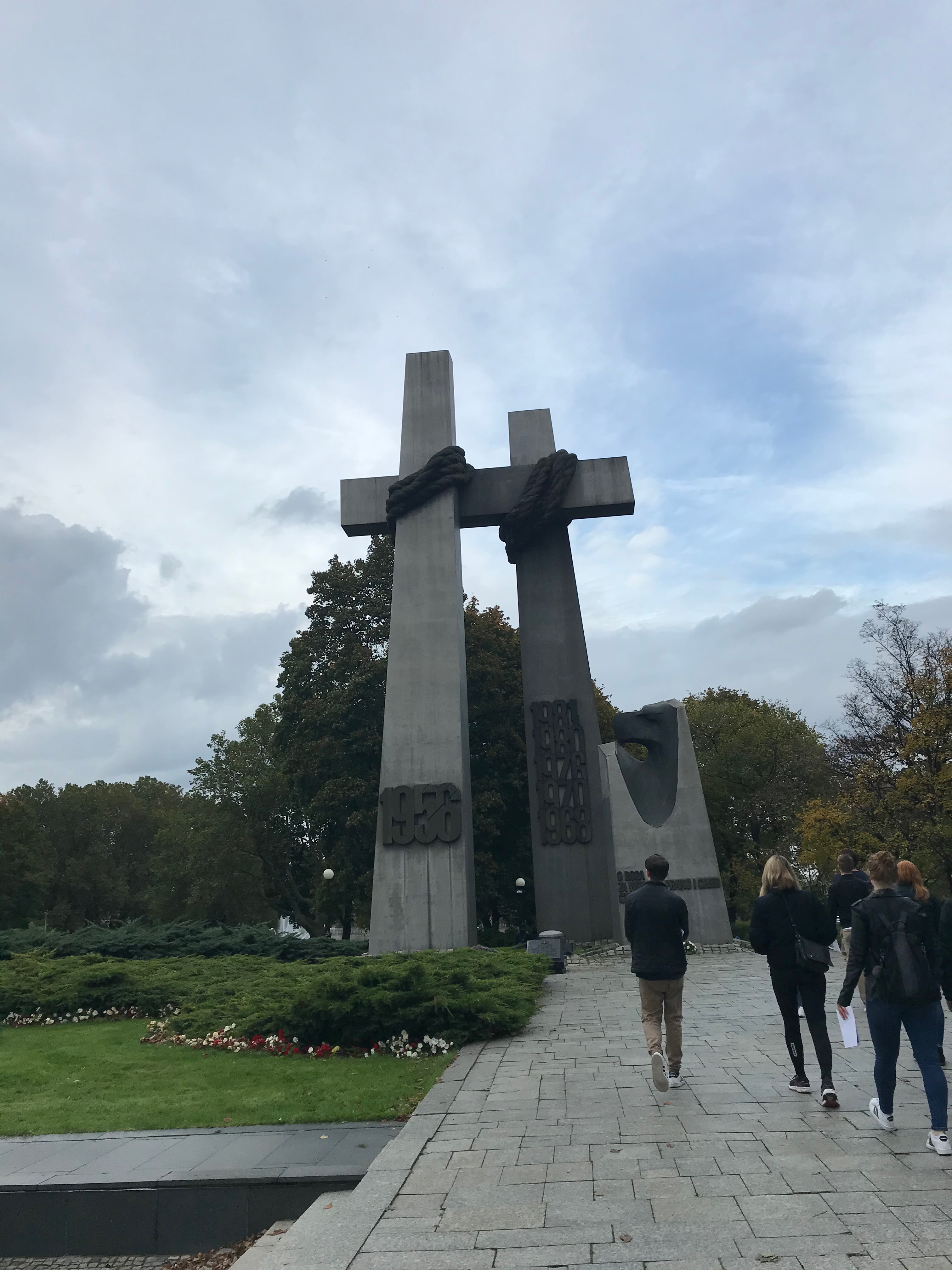
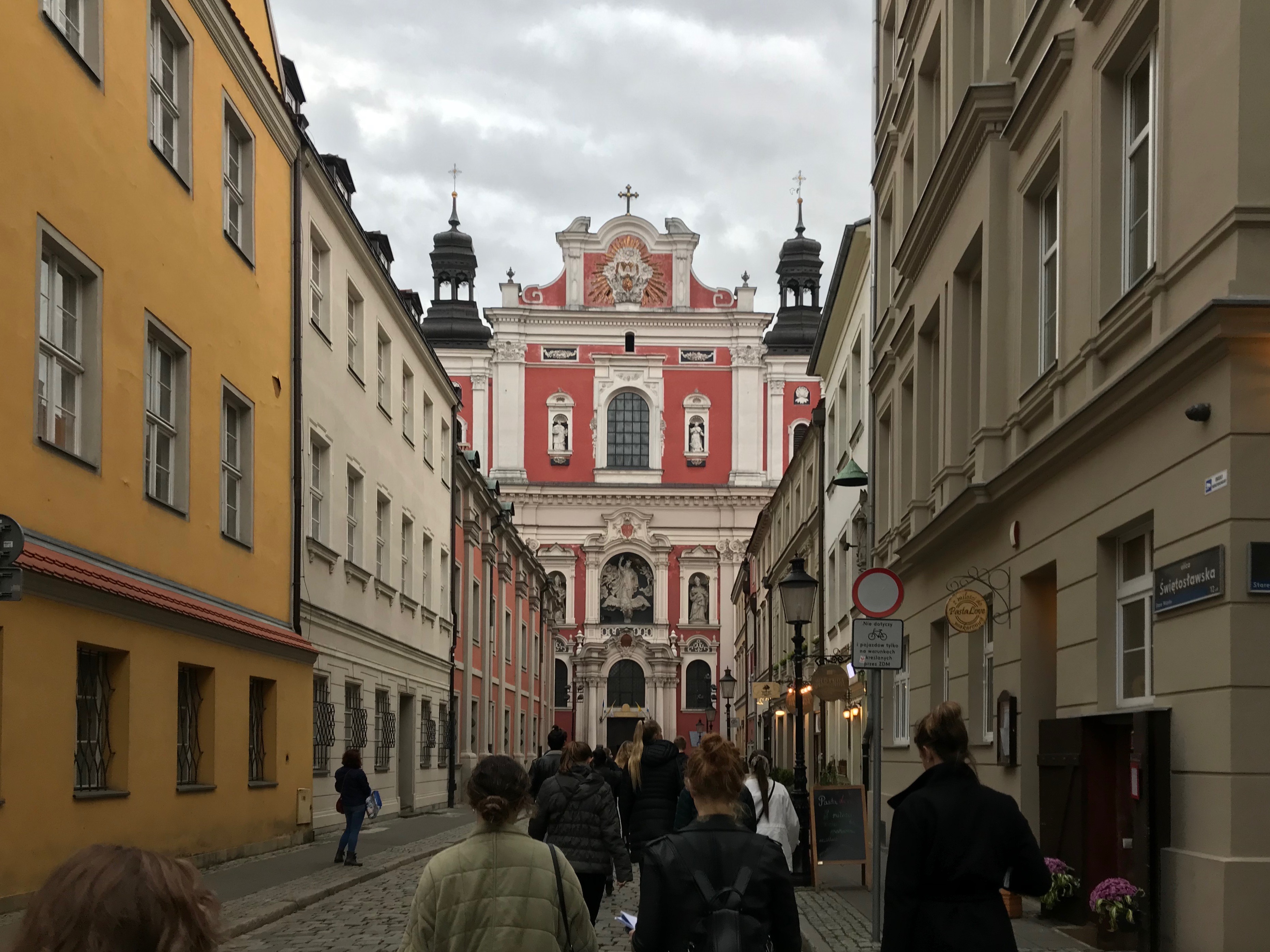
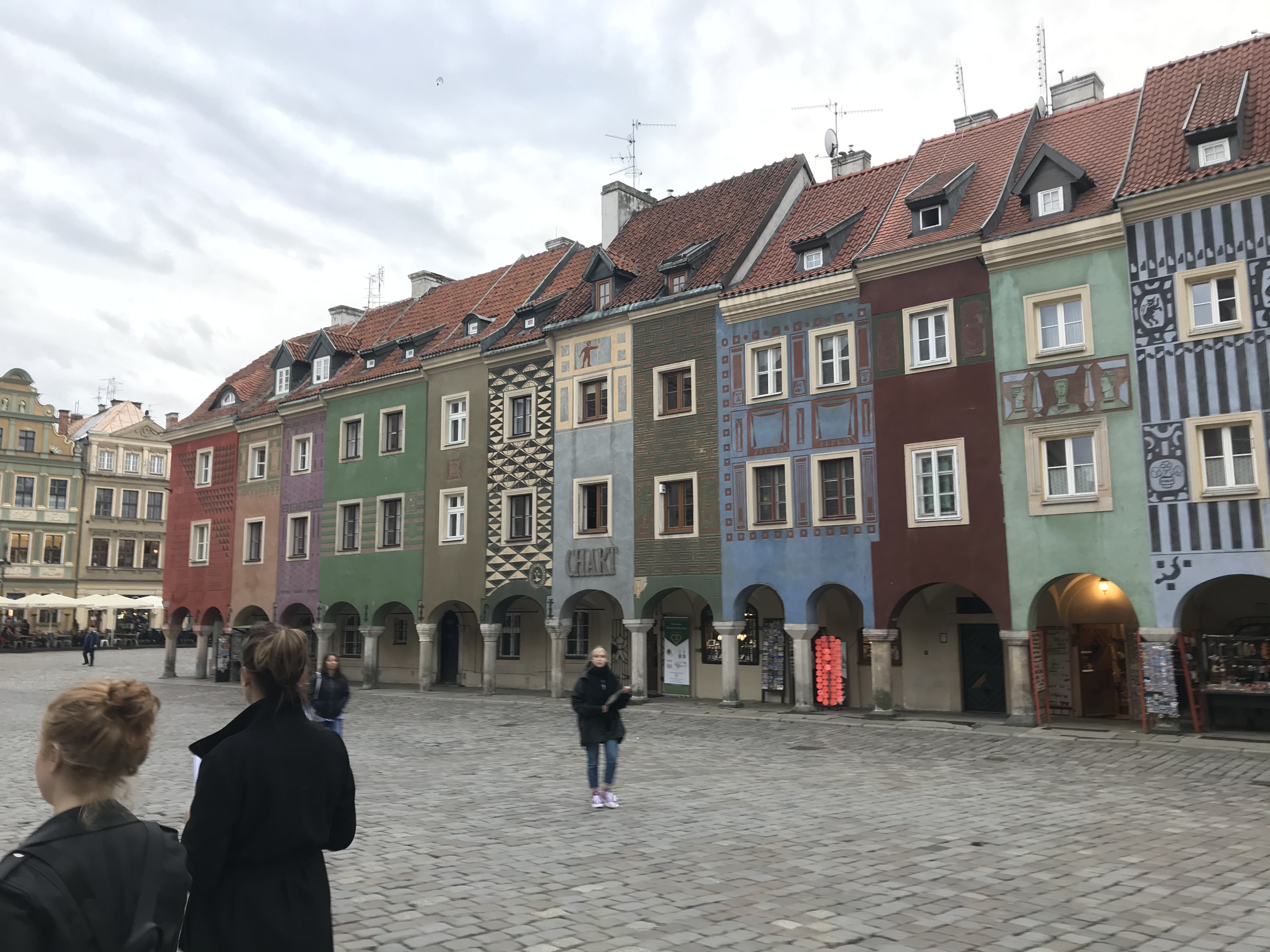
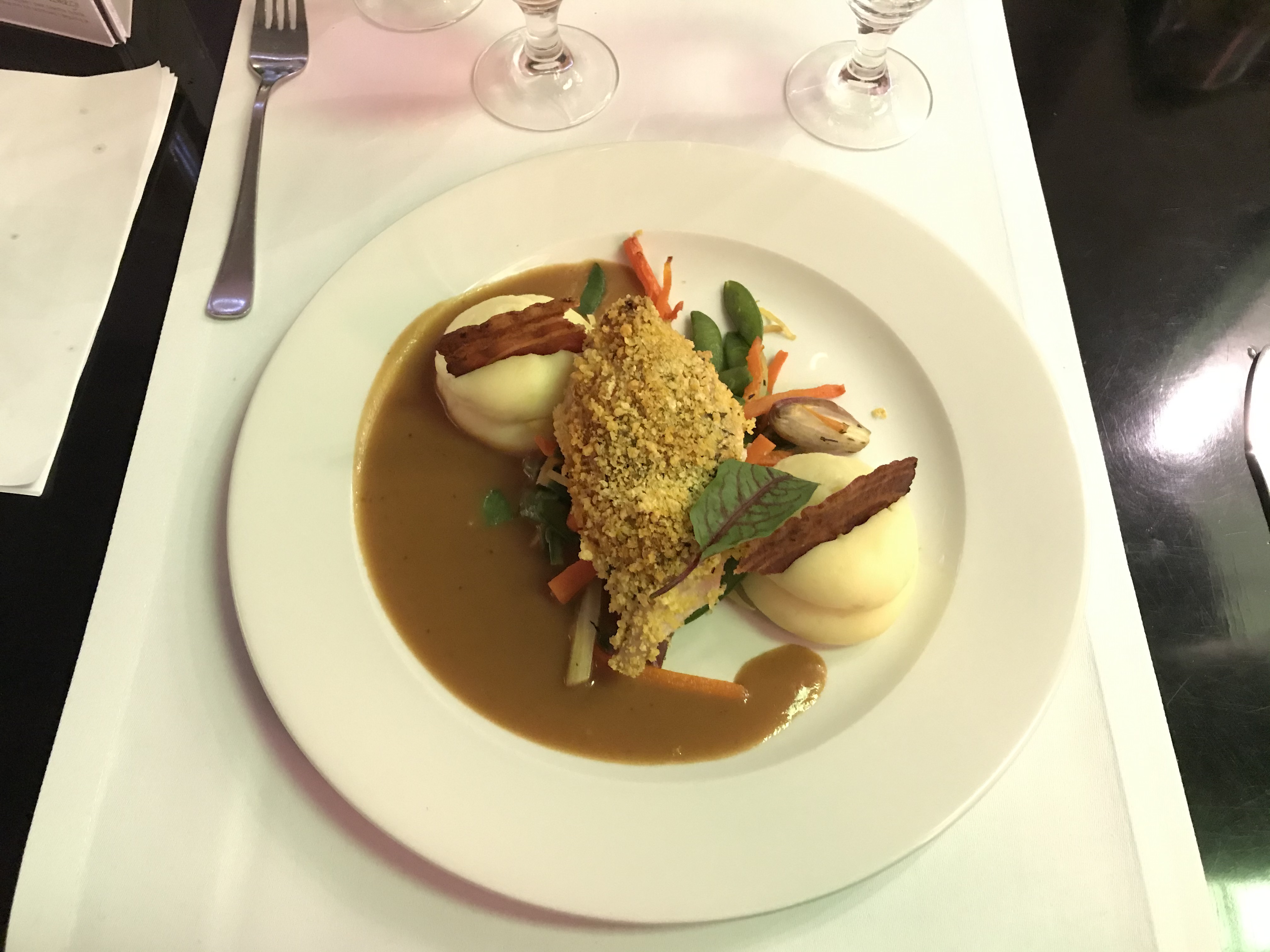
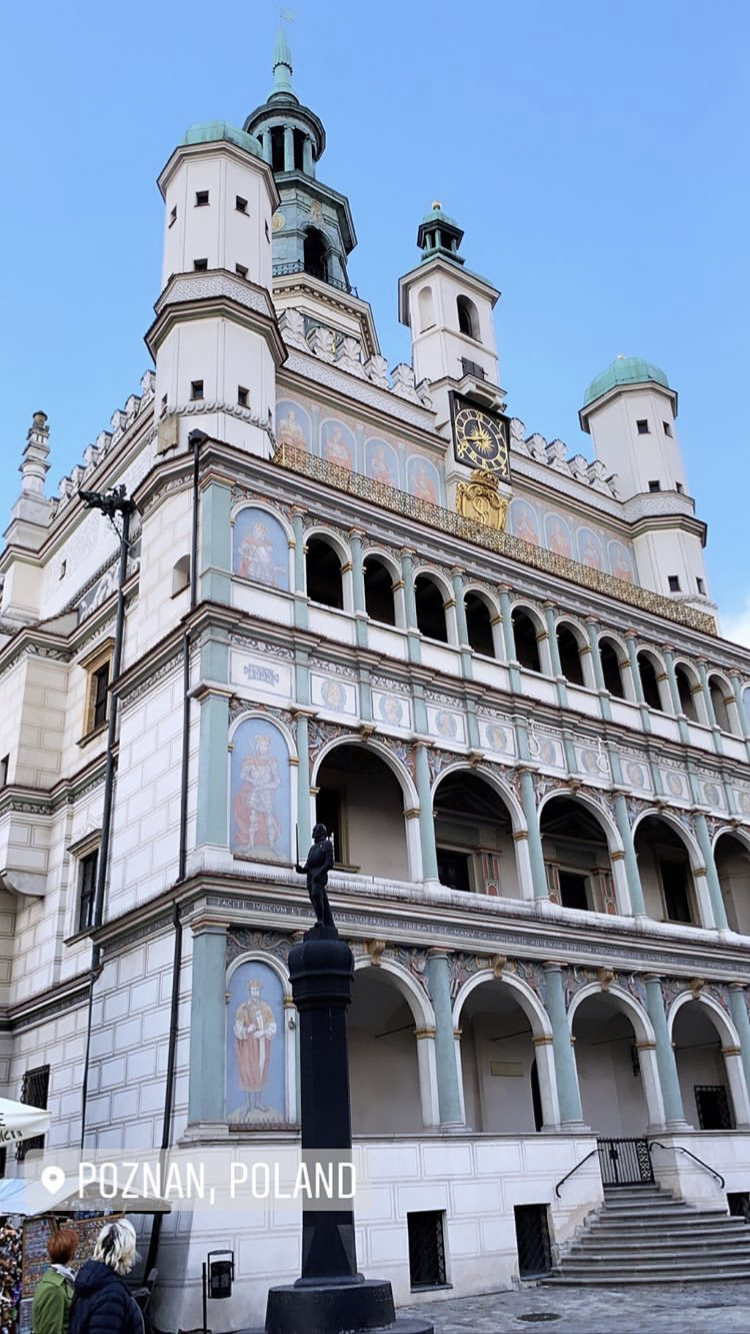
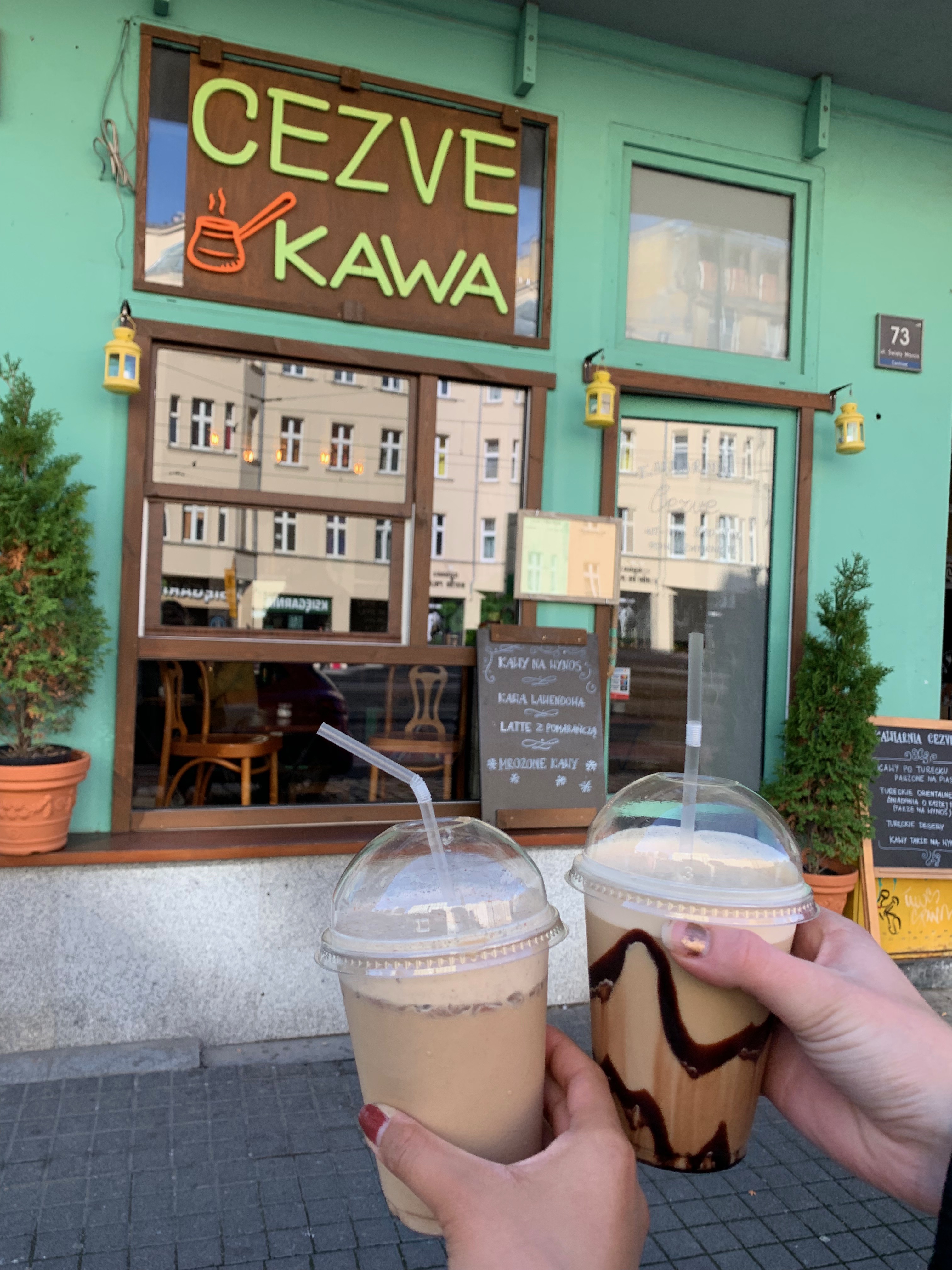
After PUMS, we went to lunch at Tequilarnia, a delicious Mexican food place in the old town square – I enjoyed my pear & chocolate margarita 🙂 . The square was super cute and reminded me of a mini Nyhavn (without the water). We then went on a self-guided walking tour of Poznań as a class. Each person presented a different famous site to the group – I shared about the town hall, where two mechanical goats butt heads every day at noon (legend has it that two goats escaped the royal cook and ran up to the top of the tower, and the royalty enjoyed the entertainment so much that they commissioned mechanical goats to be installed permanently). That night, DIS treated us to dinner at Brovaria, where we had three delicious courses of Polish food (pierogis and chicken).
Thursday:
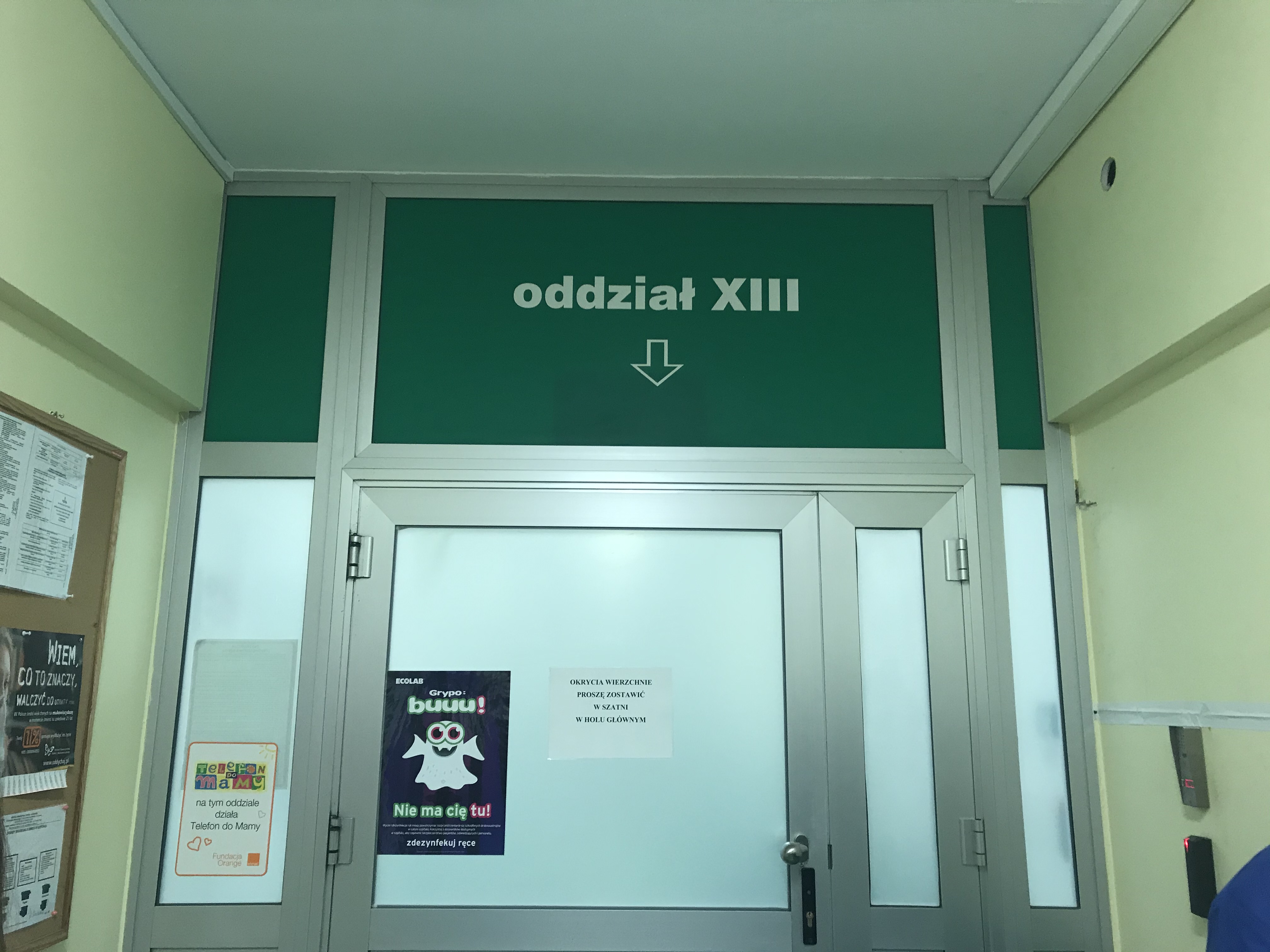
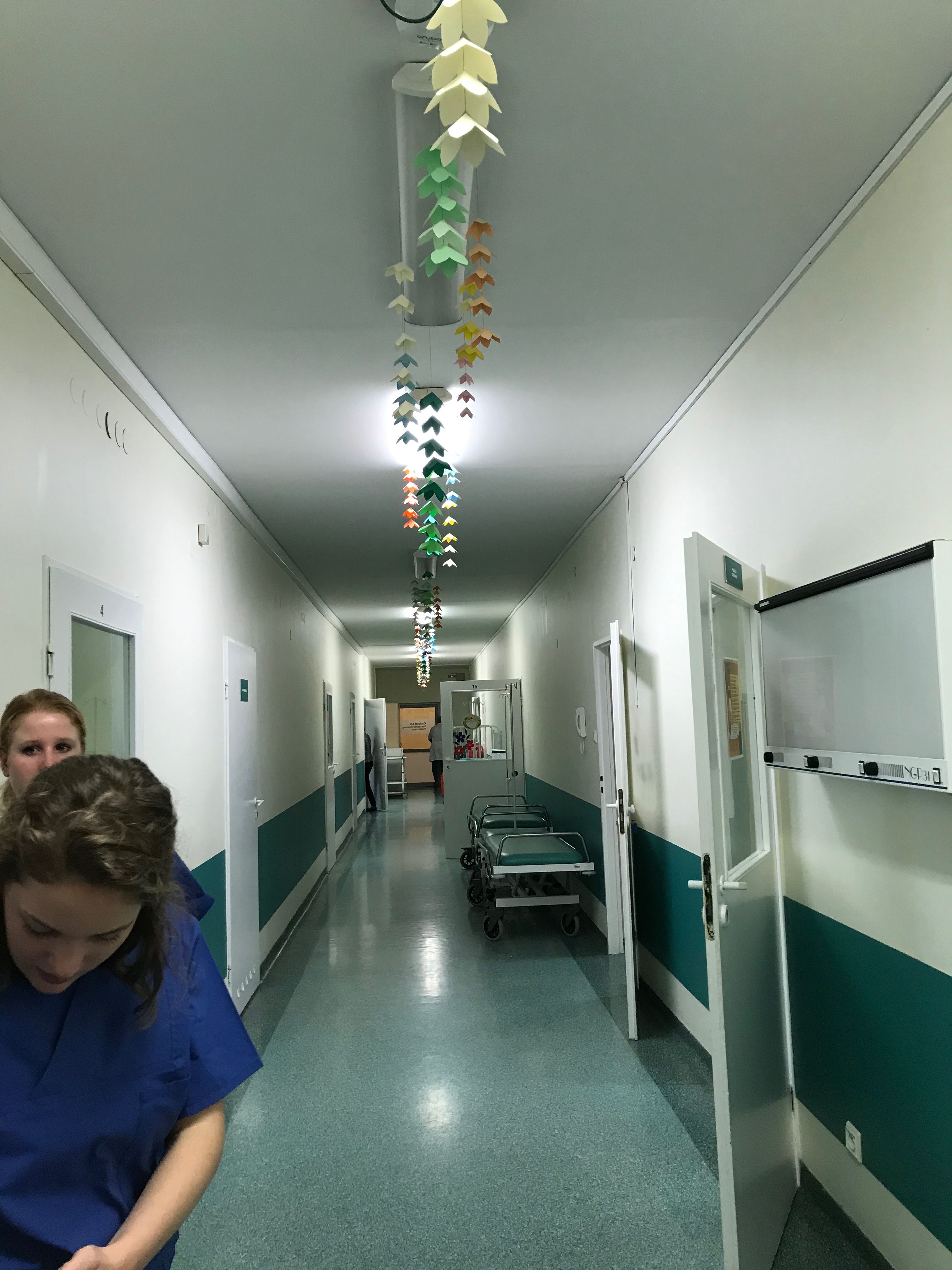
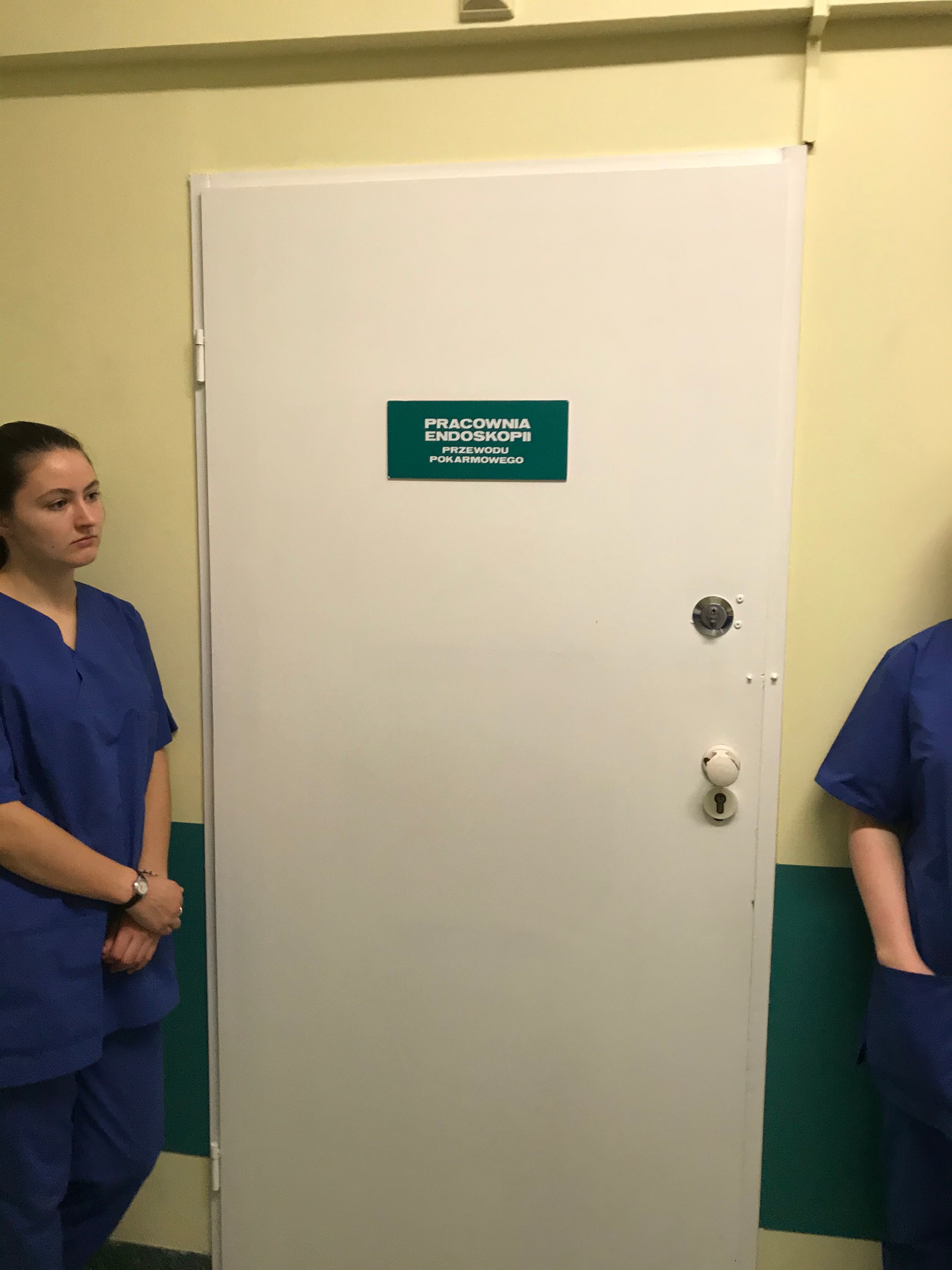
On our last full day of long study tour, we visited the Poznan University of Medical Sciences Department of Pediatric Gastroenterology. The doctor who showed us around was AWESOME and told us all about the Polish healthcare system. We got to watch an endoscopy of a fifteen-year-old girl, and we also saw six-month-old twins with gastroesophageal reflux disease (GERD) because they were born prematurely. It was difficult to understand the doctor when he spoke Polish to the twins’ mom, but I caught a few words (fundoplication!). Our last patient was a three-year-old girl with cerebral palsy who had traveled 170 km to the hospital to have a feeding tube placed. It was very interesting to see how different Poland was – the doctor was brusque, fast-moving, and exhausted, and the hallways were crowded (five patients to a room) and loud. We learned that the wait times for most specialties were 1-2 years.
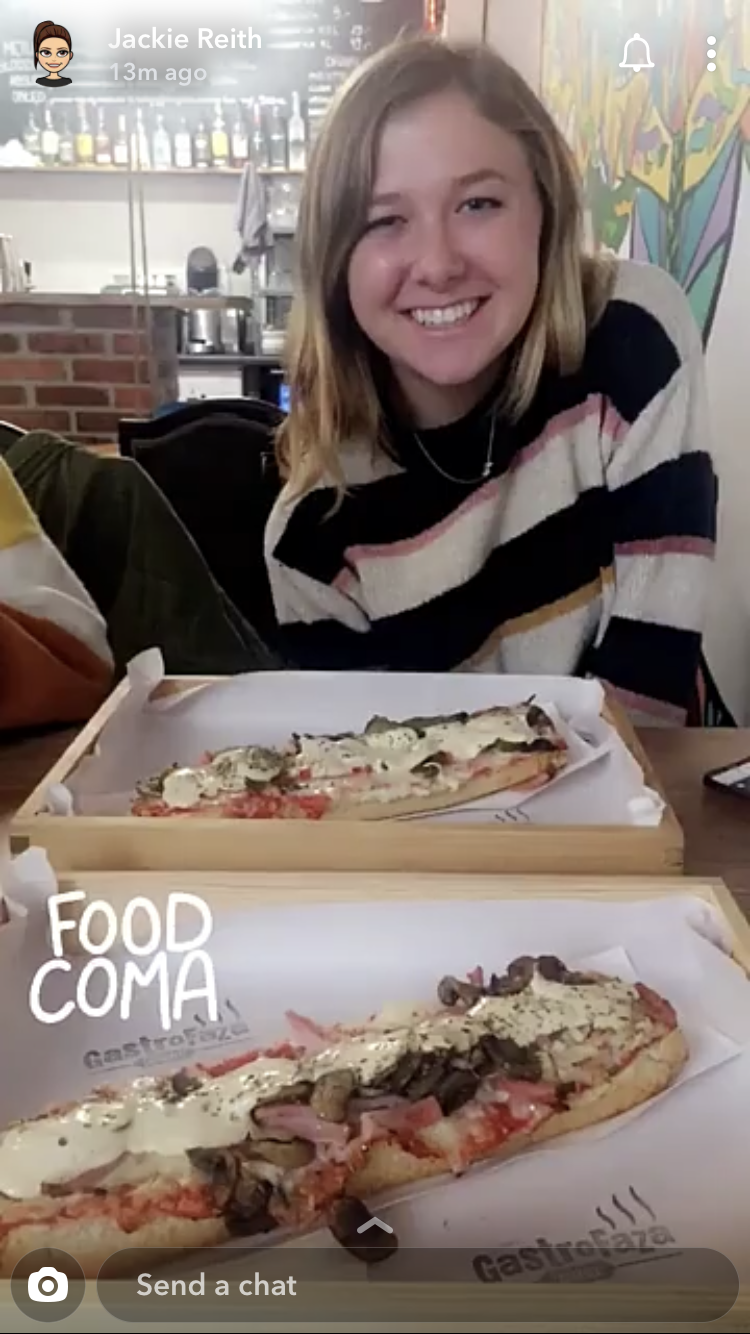
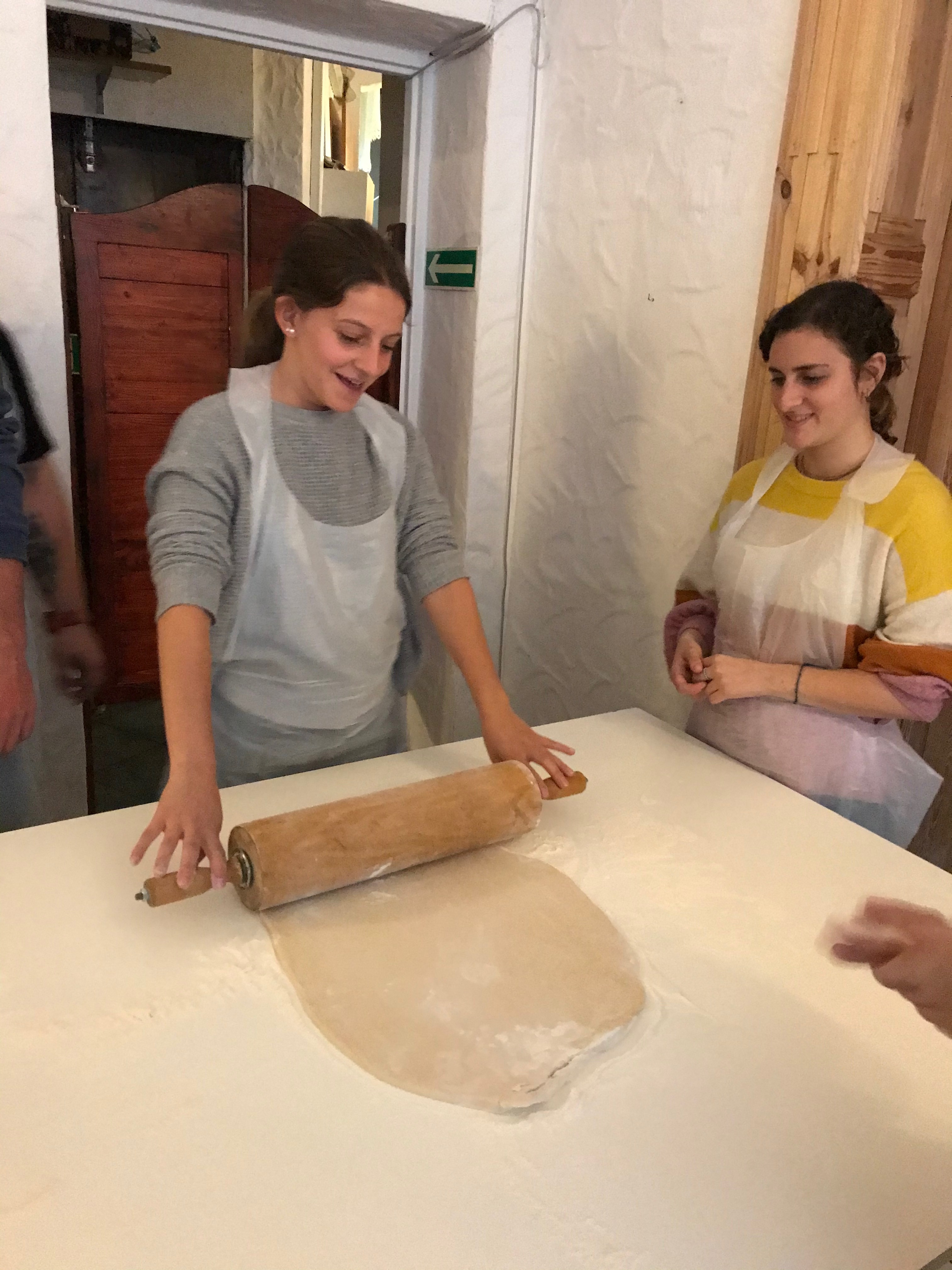
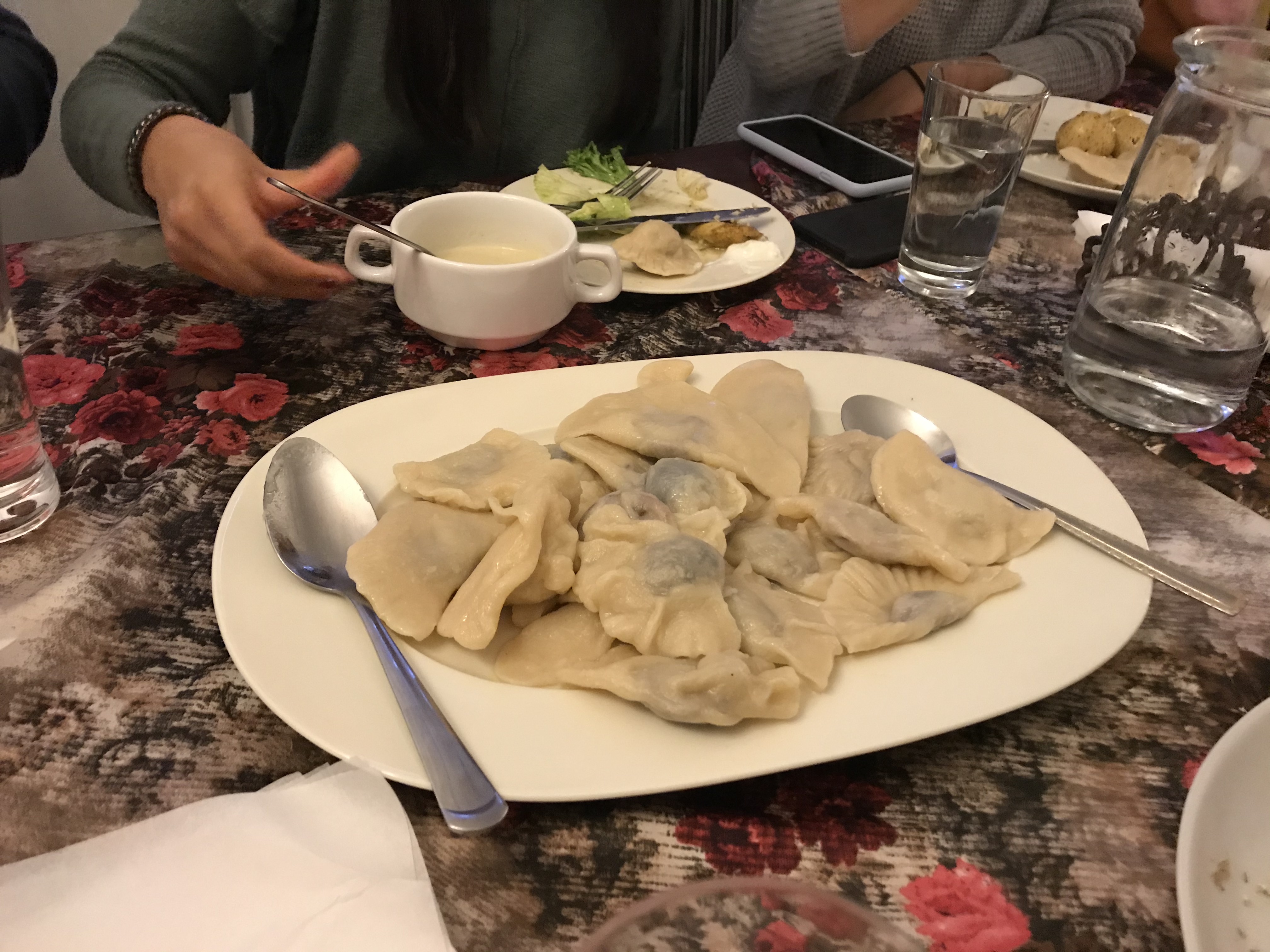
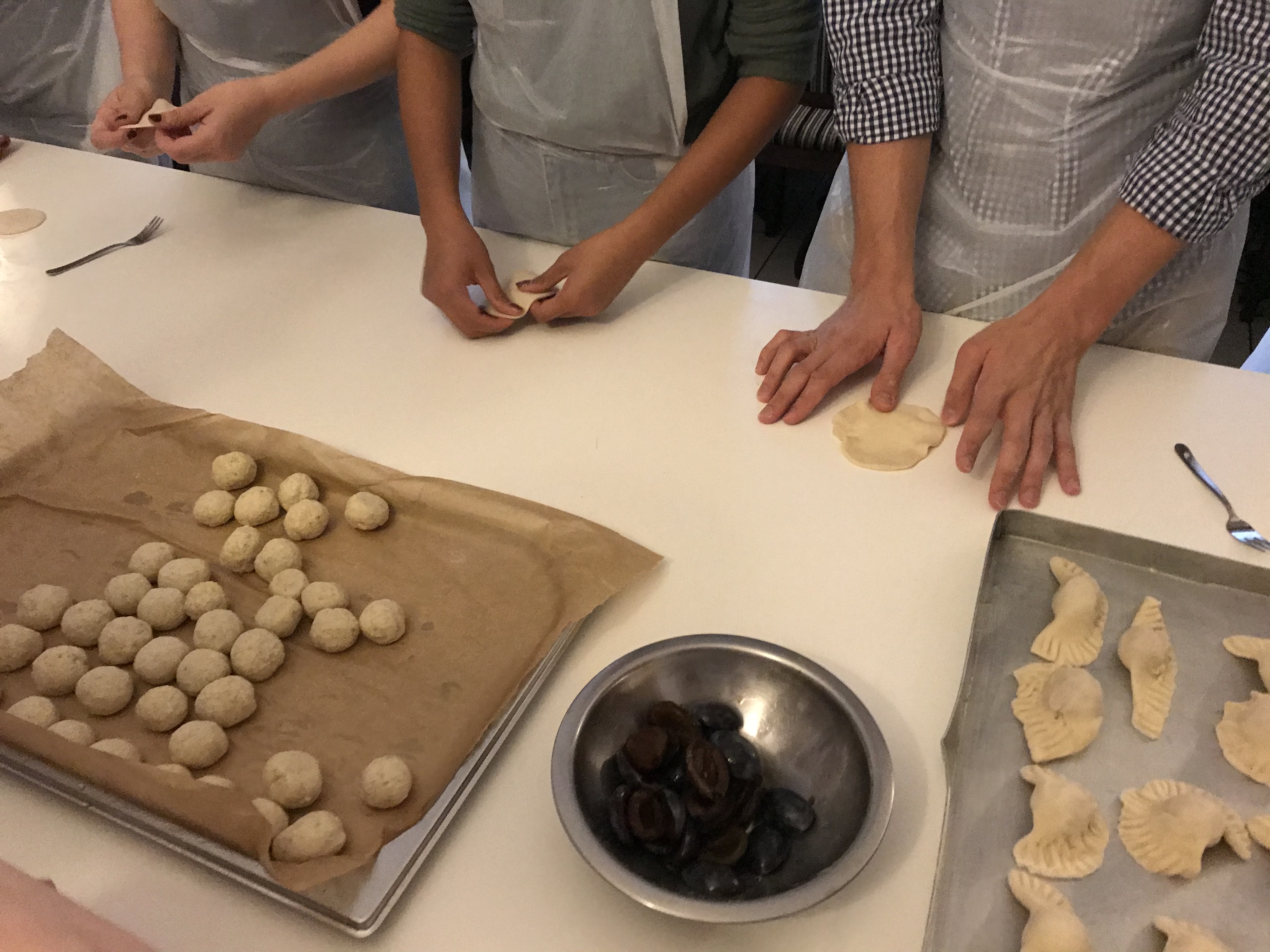
For lunch that day, we had zapiekanka, a traditional Polish open-faced sandwich. We ended the day with group pierogi-making – aka we made tons of little Polish dumplings (potatoes, pork, and prunes – not all together, obviously)!
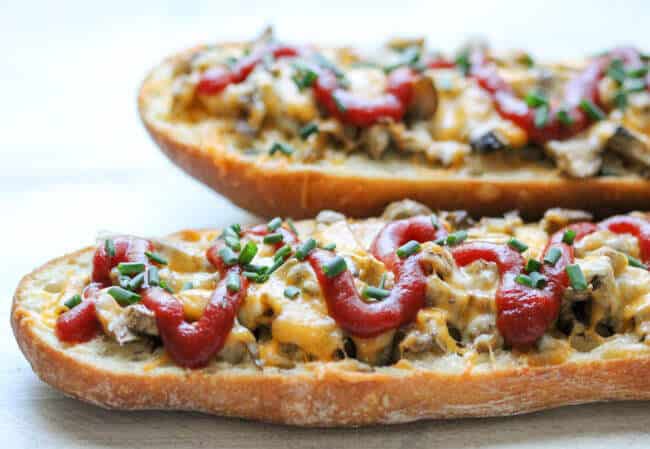
polish dictionary moment
zapiekanka: (n) an open-face sandwich made of half of a baguette topped with sautéed white mushrooms and cheese and toasted until the cheese melts.
pierogi: (n) filled dumplings of Central and Eastern European origin made by wrapping unleavened dough around a savory or sweet filling and cooking in boiling water.
Friday:
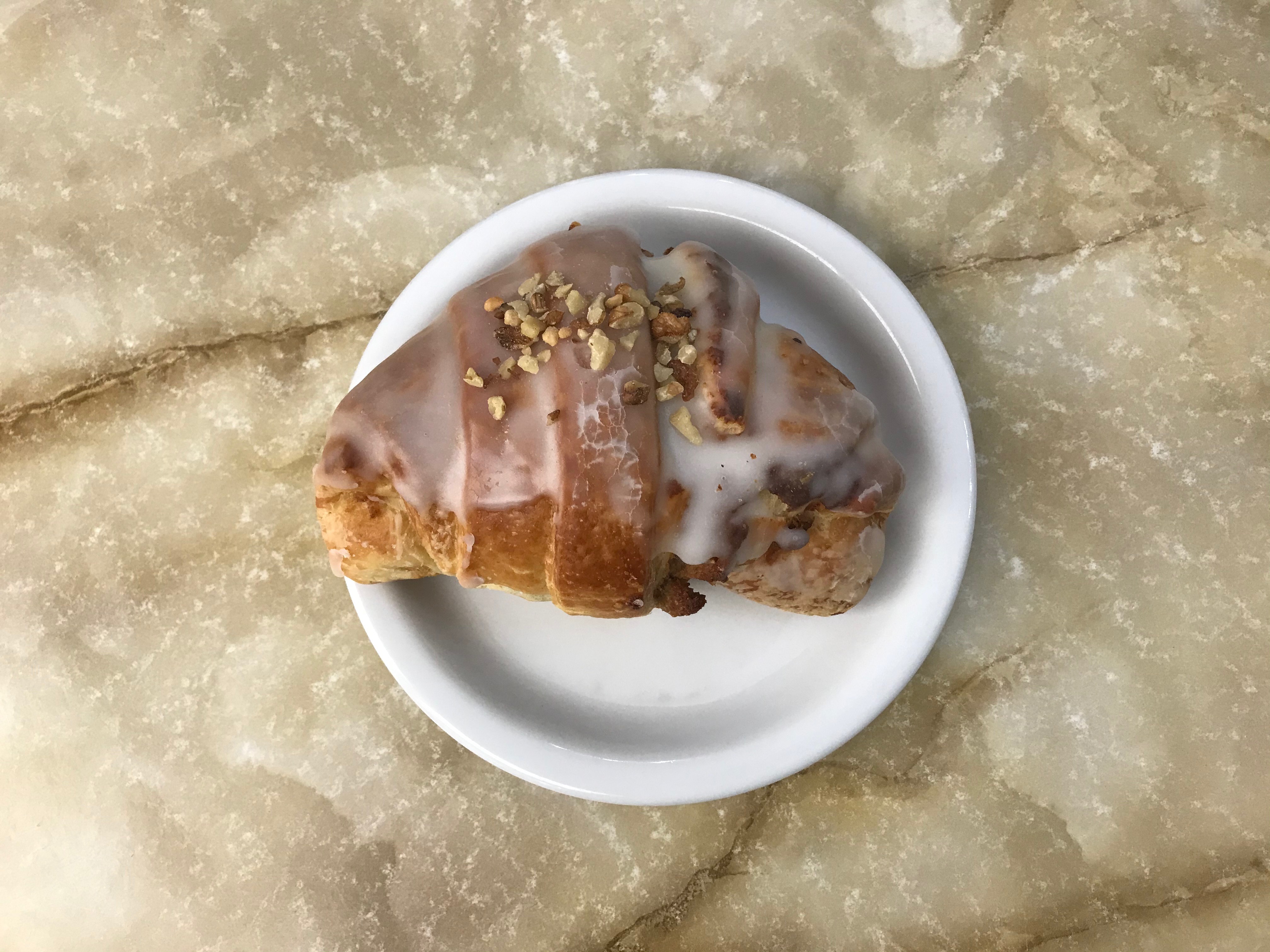
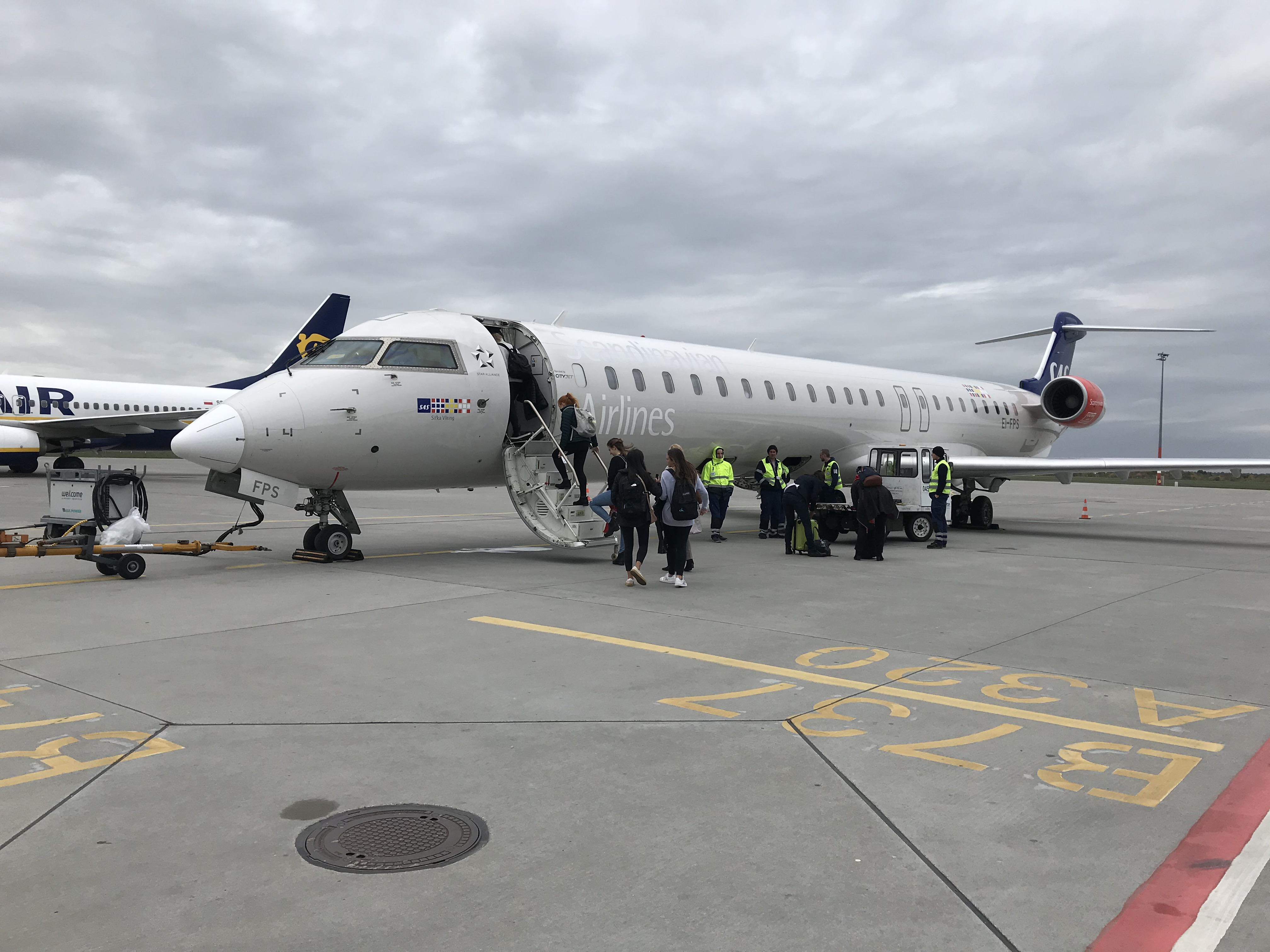
Today, we wrapped up long study tour with a recap of all our visits and some group work on our research projects. My group is comparing the impact of socioeconomic status on access to healthcare in Denmark versus Poland. I enjoyed a famous St. Martin’s croissant (a Polish croissant with a recipe dating back to 1891 and protected by EU law), and then we flew back to Copenhagen!
I had an absolutely fantastic week – it’s such a special experience that we get to travel with our class. This week, I got even closer with my classmates and enjoyed learning about the German and Polish healthcare systems firsthand. It goes right along with the DIS motto – “Copenhagen as your home, Europe as your classroom.” Tomorrow, I’m off to Brussels for some Belgian chocolate and waffles with my friend Paige from Notre Dame. Auf wiedersehen and do widzenia! 🙂
 copenAIDAN